 Historian

 Seodaemun Prison History Hall
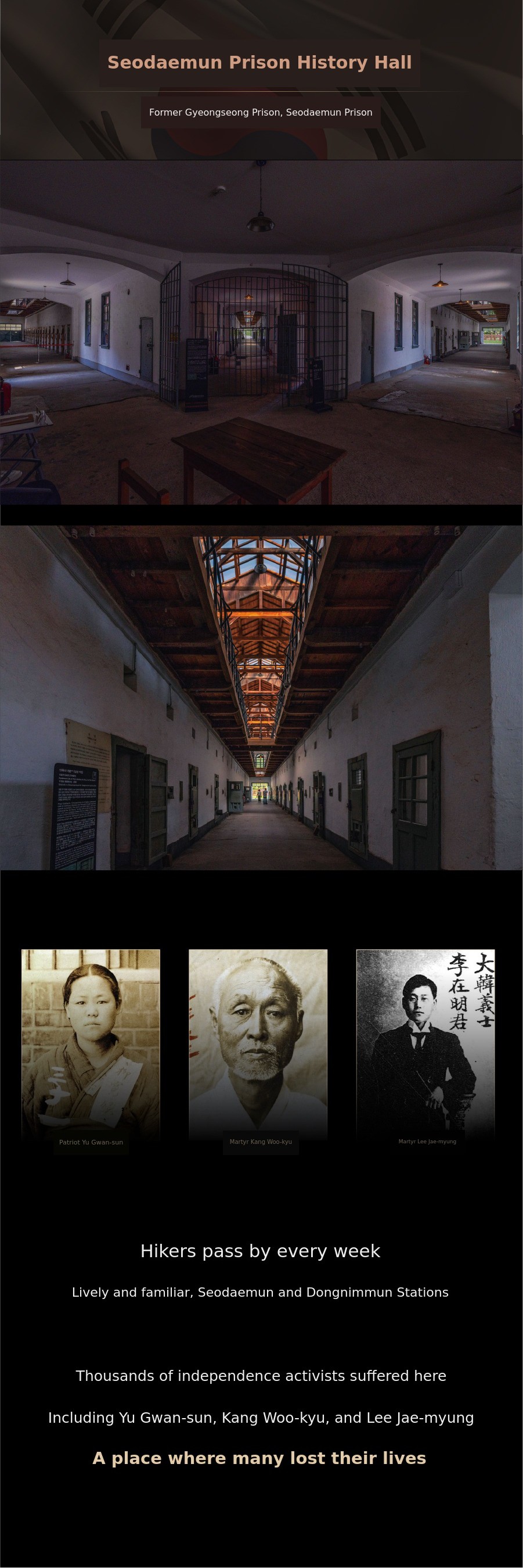
A place that was actually used as a prison during the Japanese colonial period, where countless independence activists were imprisoned, tortured, and executed.
Syngman Rhee, Kim Gu, Ahn Chang-ho, Yu Gwan-sun, Kang Woo-kyu, Lee Jae-myung, and many others An innumerable number of independence activists passed through here, and it is the actual site where executions were carried out.
It is an iconic site of Seoul Dark Tour, with the prison and execution grounds preserved as they were, and the women's prison, where female independence activists including Yu Gwan-sun were incarcerated, has also been reconstructed. In one corner of the execution ground, where hundreds of executions actually took place, part of the 'Sigumun,' where the Japanese secretly disposed of bodies to conceal torture and executions, has also been restored.
A place known as the Korean Auschwitz.
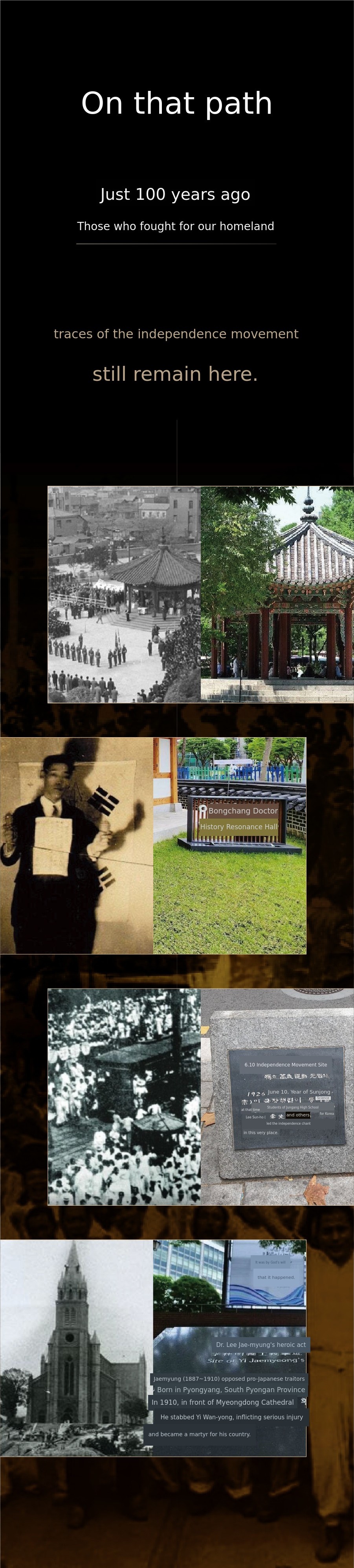
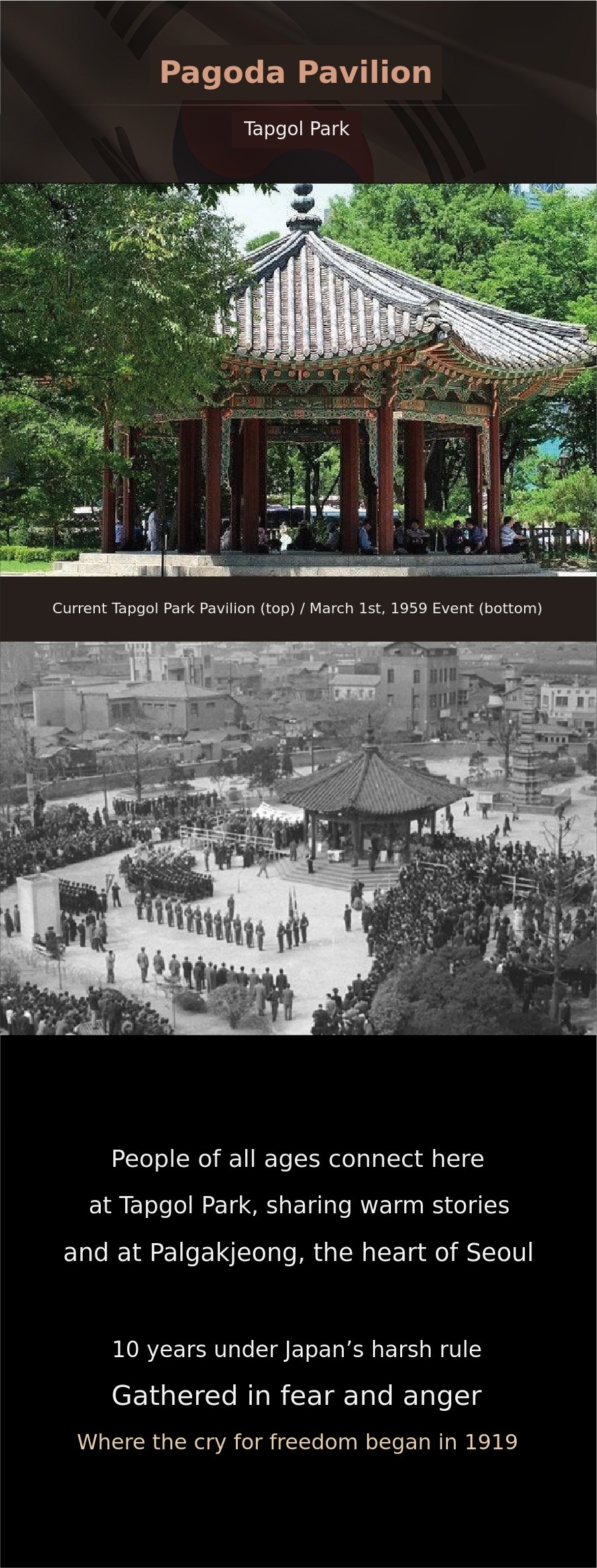 In 1919, students and citizens
read the Declaration of Independence for the first time and began the historic Manse movement.
Fearing violent clashes with the Japanese military, the 33 national representatives changed the site for reading the Declaration of Independence from Tapgol Park to Taehwagwan in Insadong, but students and citizens who did not receive this information gathered at Tapgol Park.
The Manse movement, which was nearly canceled, began thanks to a young man who climbed up to the Palgakjeong Pavilion, read the Declaration of Independence, and led the crowd in chanting Manse.
The starting point of that shout and the landmark of the March 1st Movement.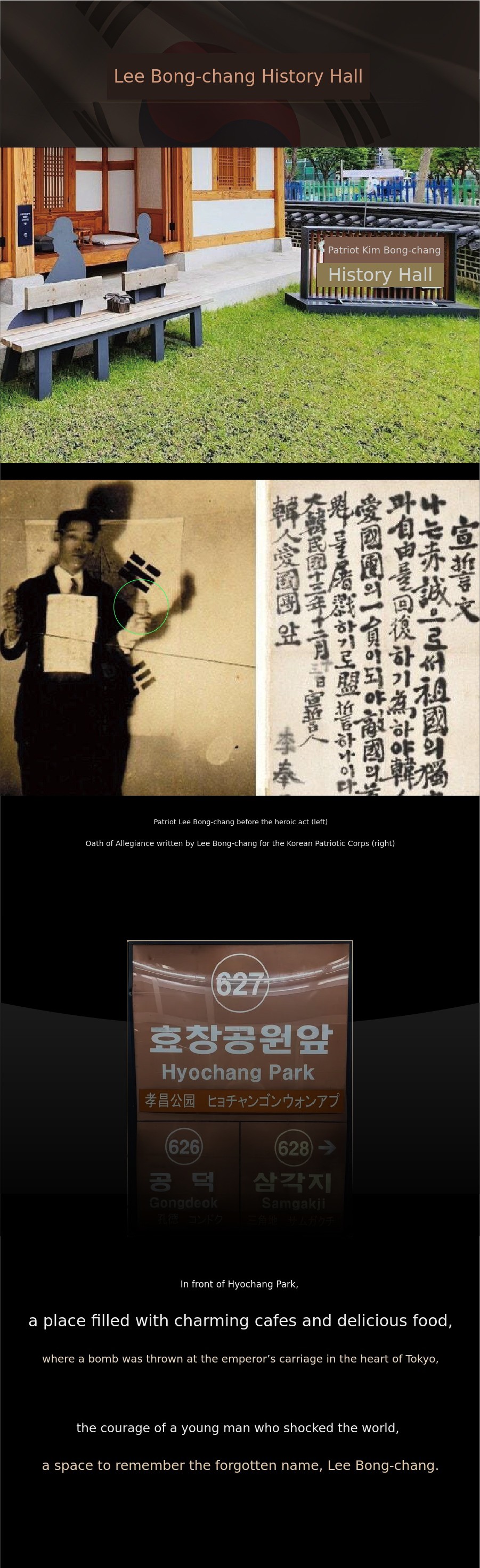 The memorial hall for Lee Bong-chang, which opened in 2020.
The grave where Lee Bong-chang's remains are enshrined is in the Samuisa Cemetery at nearby Hyochang Park, only about 800 meters from the History Echo Hall.
A native of Yongsan,The memorial hall built near the site of Lee Bong-chang's house It is located less than a minute from Exit 1 of Hyochang Park Station, but few people know about it.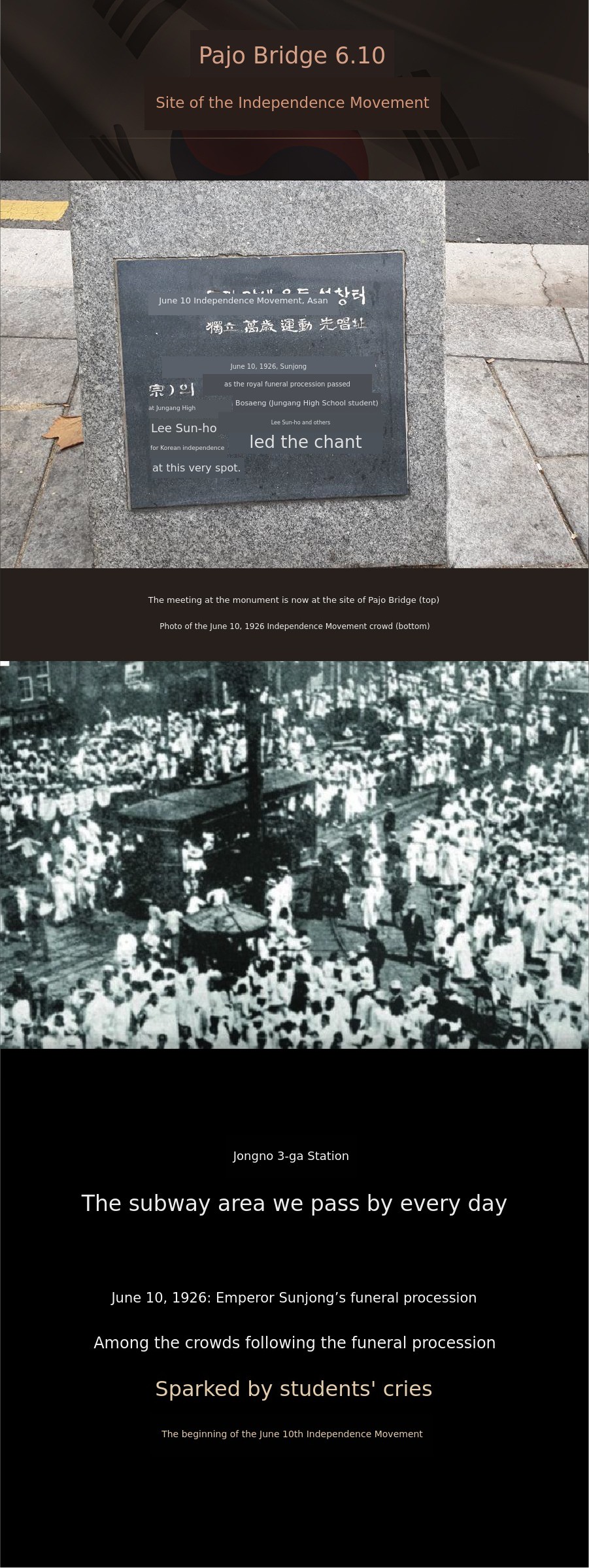 In front of Dansungsa, Korea's first movie theater, was the site of the Pajogyo Bridge during the Joseon Dynasty.
On June 10, 1926, the day of Emperor Sunjong's funeral, when the royal procession from Changdeokgung Palace reached this area, 40 students from Jungang High School rushed out, and led by student Lee Sun-ho,'Long live Korean independence!' Distribute thousands of manifestos shouting slogans.
Afterwards, hundreds of students and crowds joined, shouting cheers and waving the Taegeukgi, joining the protest. This was the second large-scale independence movement after the March 1st Movement.The beginning of the June 10th Independence Movement It was.
Now the bridge is gone, and only a marker remains at the busy intersection.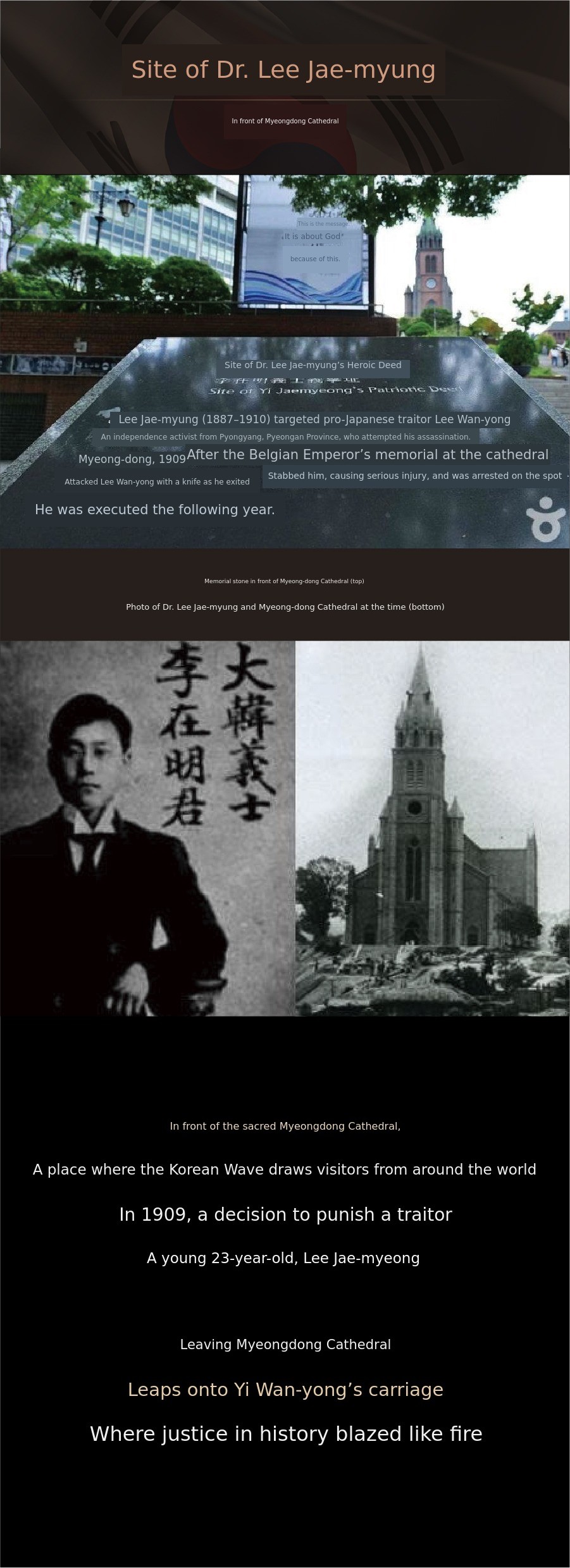 Located in Myeong-dong, the mecca of shopping and tourism in Seoul,
Right in front of Myeong-dong Cathedral, a cultural heritage site, it is a place where many people pass by.
A representative pro-Japanese collaborator,The site where Dr. Lee Jae-myeong attempted to assassinate Lee Wan-yong. It is.
After seriously injuring Lee Wan-yong, he was arrested at the scene and taken to Seodaemun Prison, and the following year, in 1910, he was executed.
At the time of his martyrdom, Dr. Lee Jae-myeong's age was24years old. It was.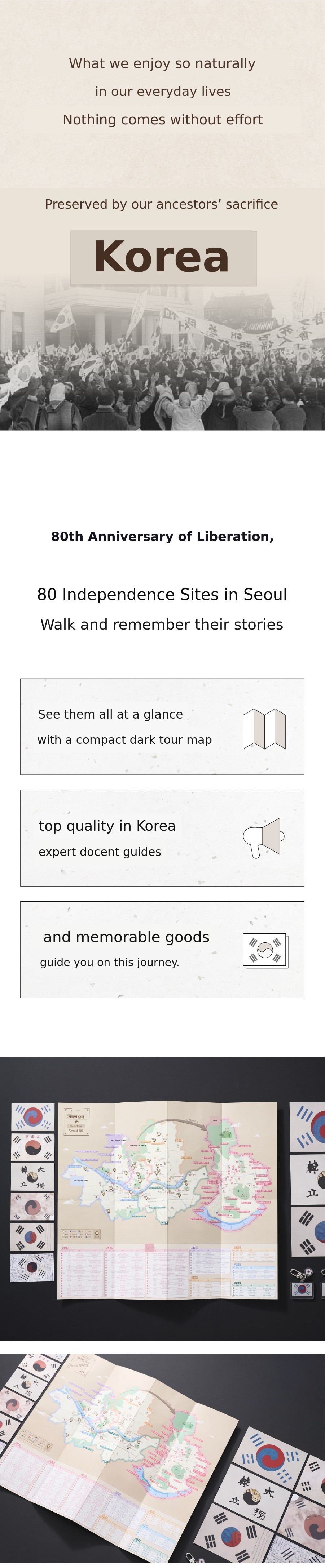

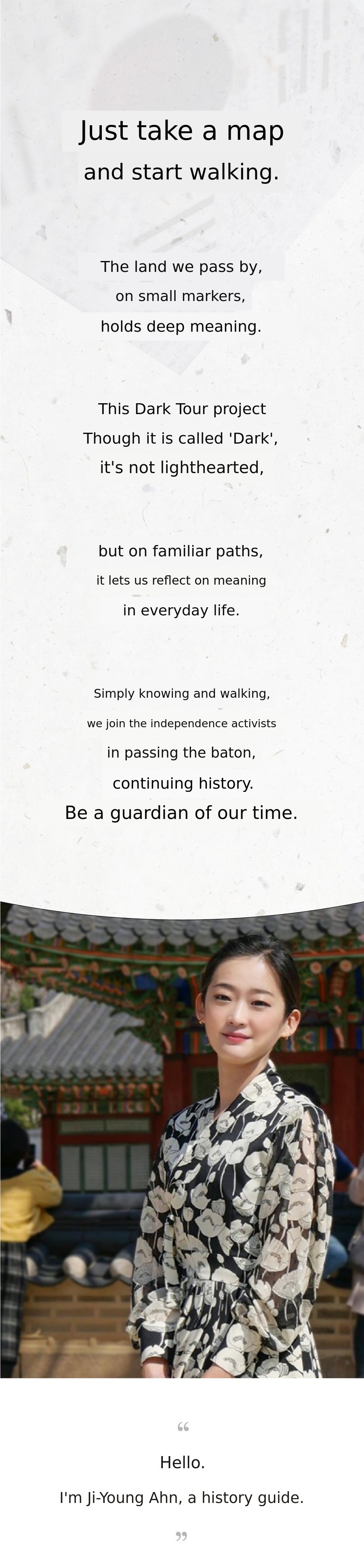
Hello.
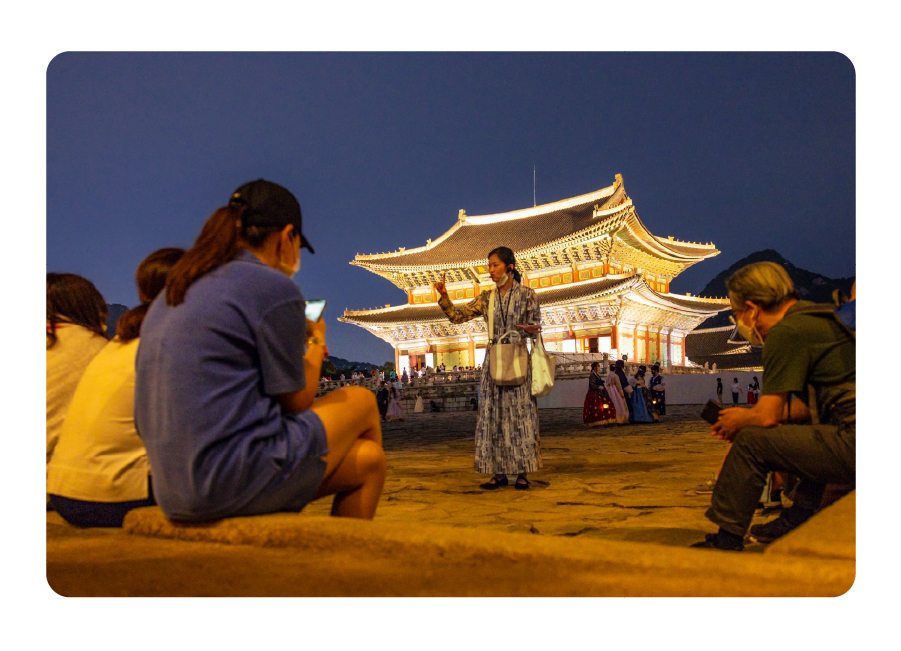
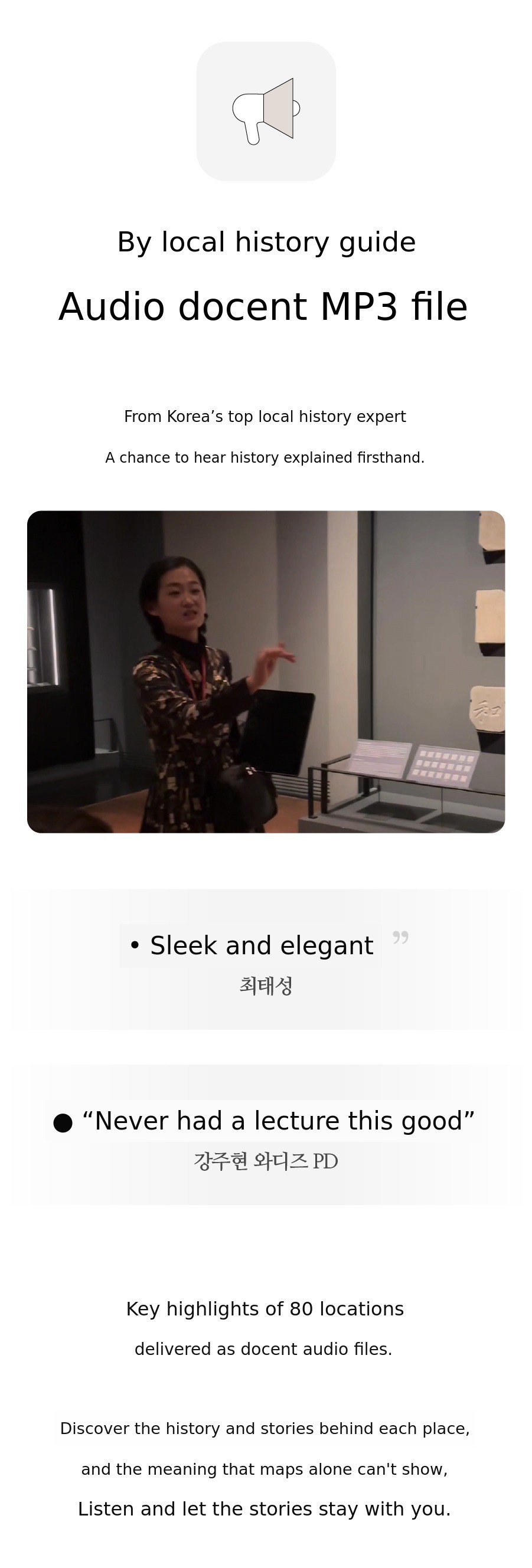
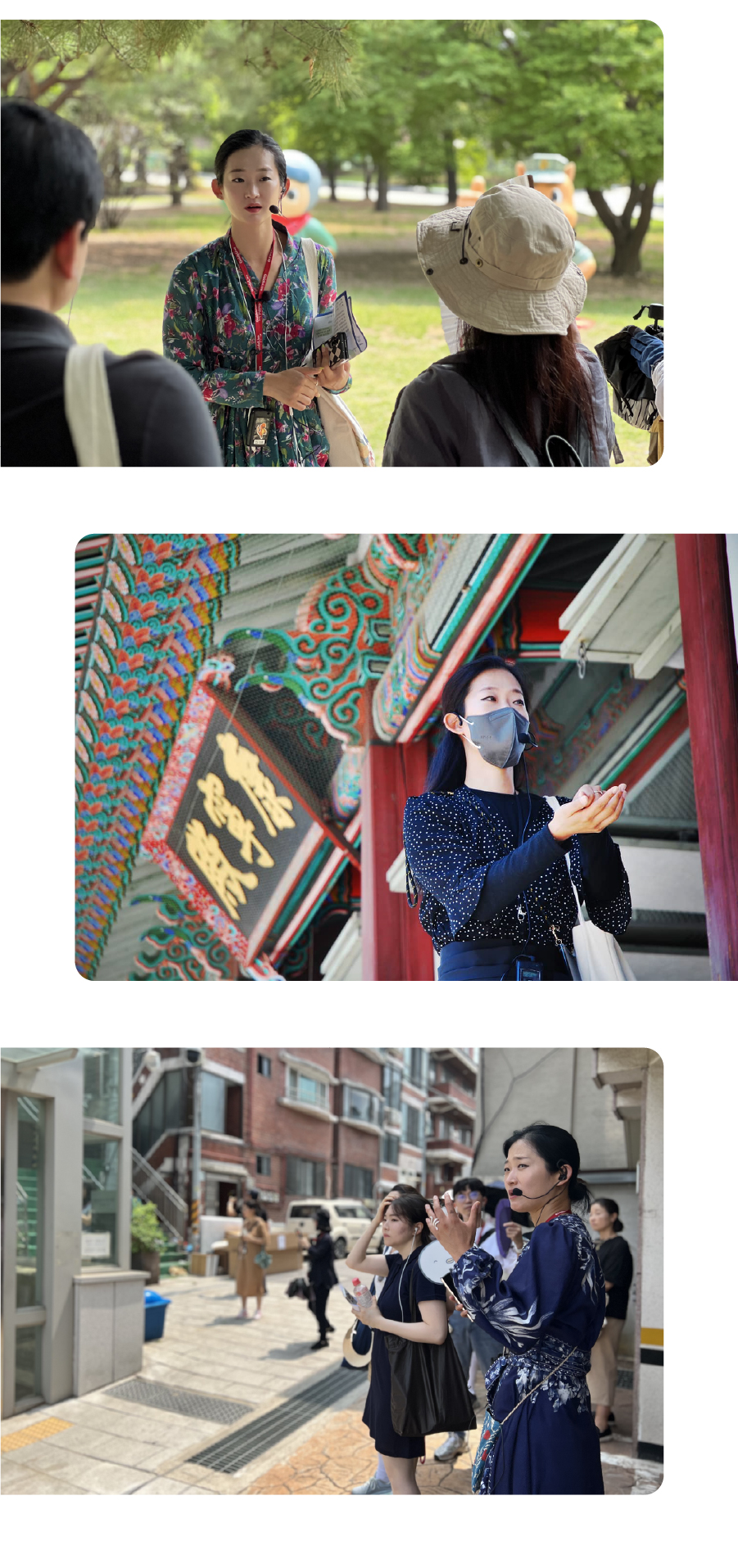
For the past 17 years, I have been sharing history at museums, historic sites, and on the streets,
with thousands of people.
I am history commentator Ahn Ji-young, Thank you.
What I always felt while walking with people on site,
was the fact that 'people are interested in history, but there are so few opportunities to actually encounter it.'
Many people told me that they don't want just special anniversaries or one-time tours,
but want to casually experience history in their daily lives.
So every year,
I develop a new themedark tour course and create opportunities
for participants to walk and experience history firsthand.
However, even just the independence movement sites in Seoul,
there are over 100 markers, but since the information is scattered,
people always reacted, 'Was there a place like this nearby?'
I wanted to solve that frustration.
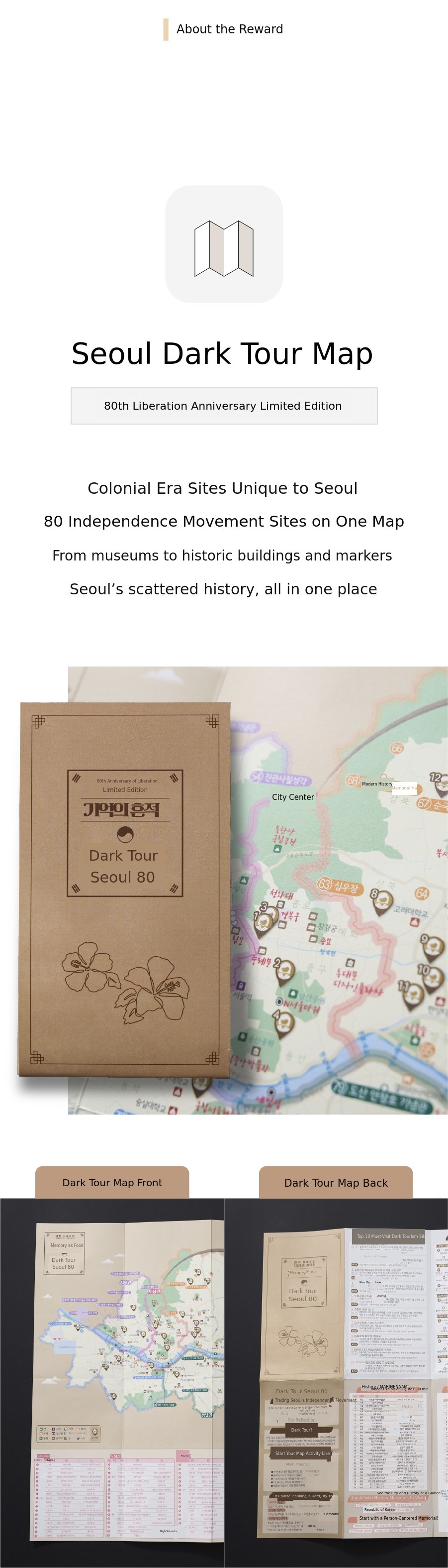
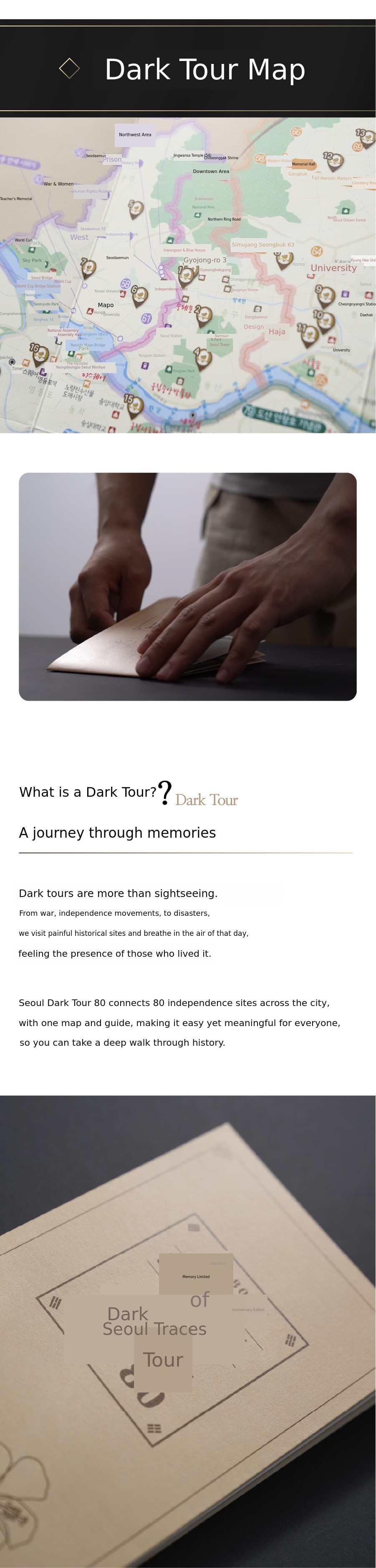
A map that anyone can take out of their pocket and walk as much as they want,
'A walking-type dark tour map'—let's make it.
This year,marks the 80th anniversary of Liberation, in Korea.
I thought there could be no better time than this.
So, beyond a simple souvenir,
We preserve memories and revive them on site.
History funding has been prepared.
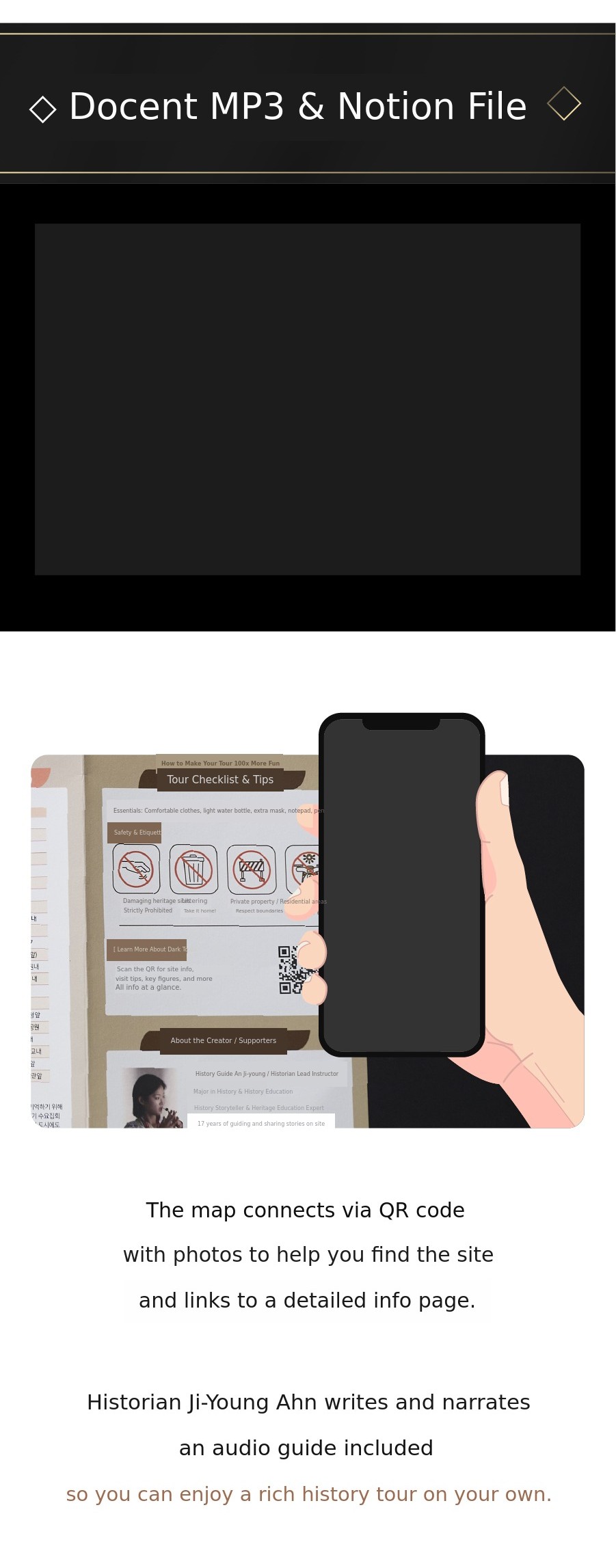
a map that captures 80 hidden traces of Seoul during the Japanese occupation at a glance,
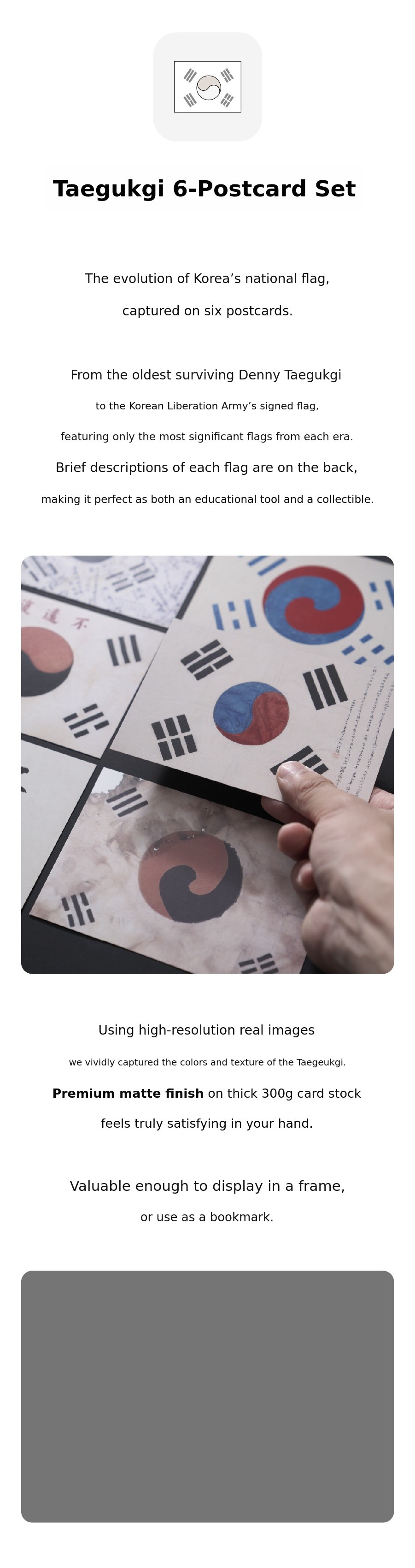
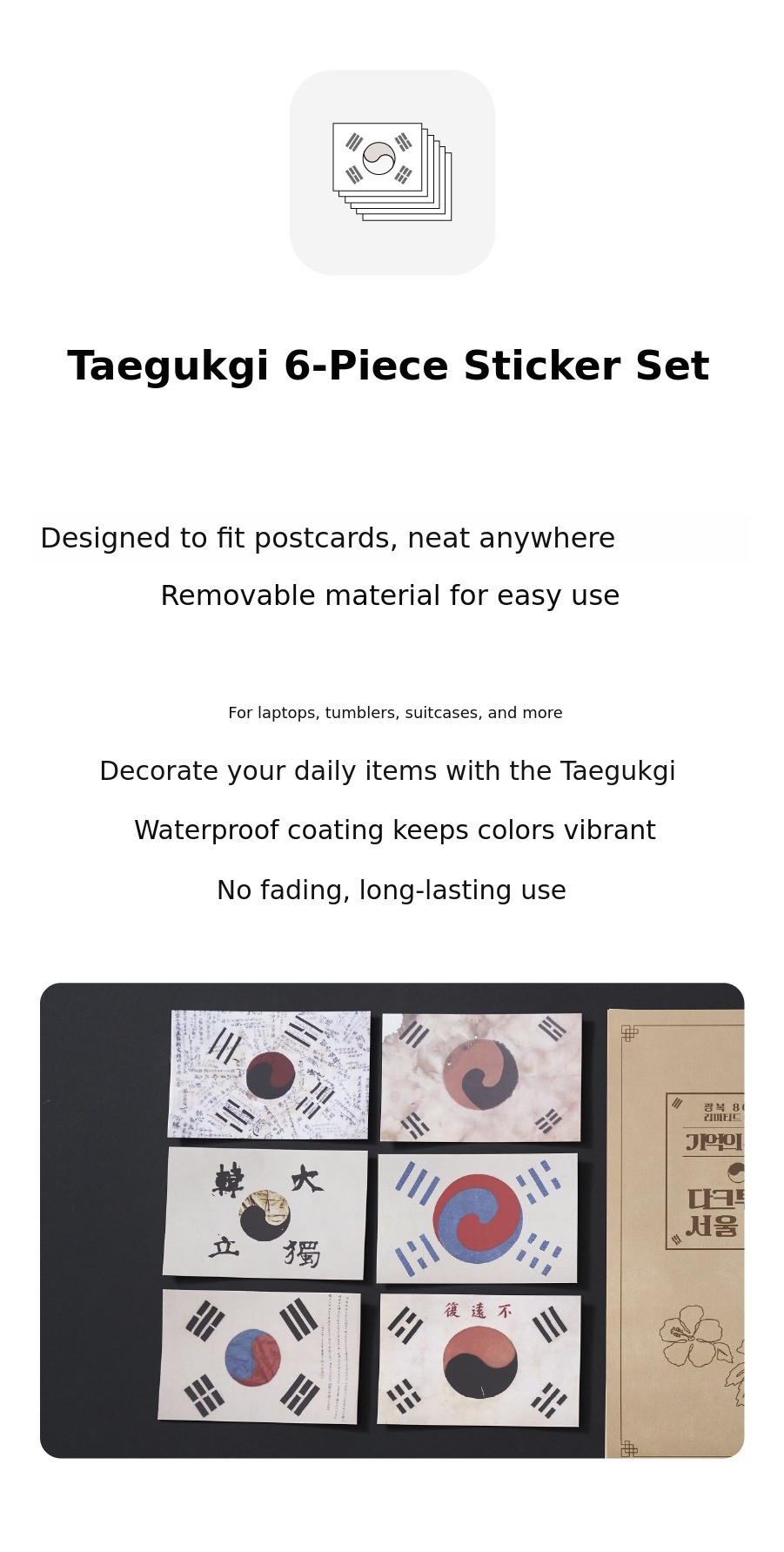
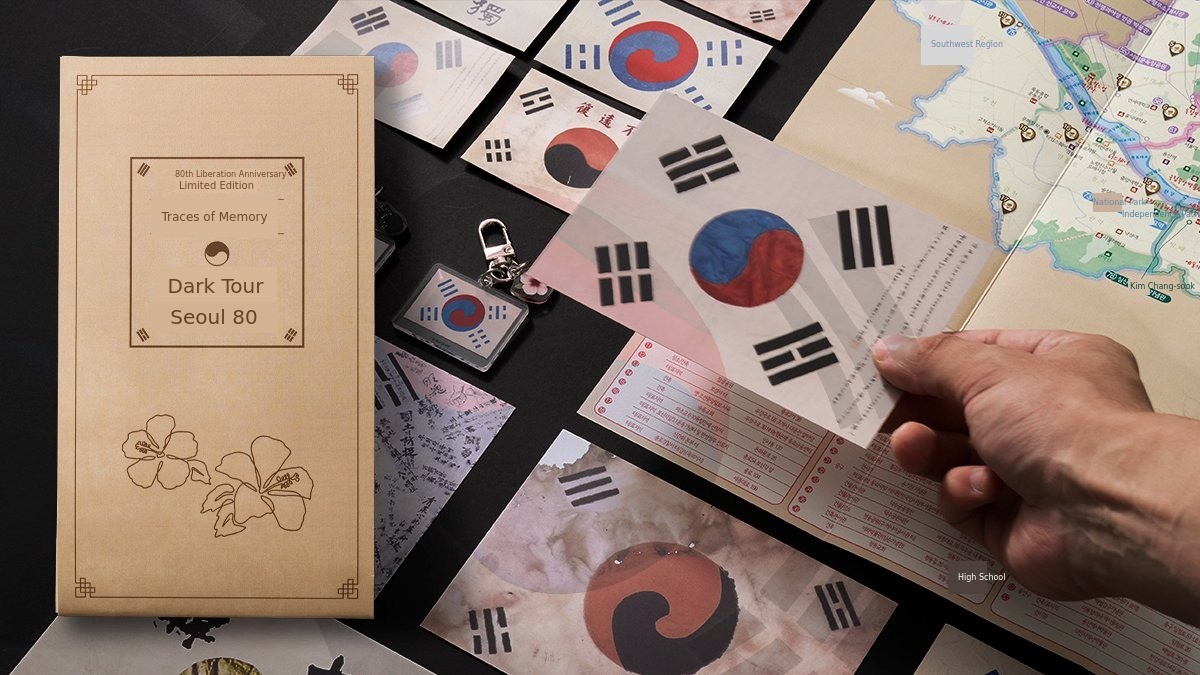
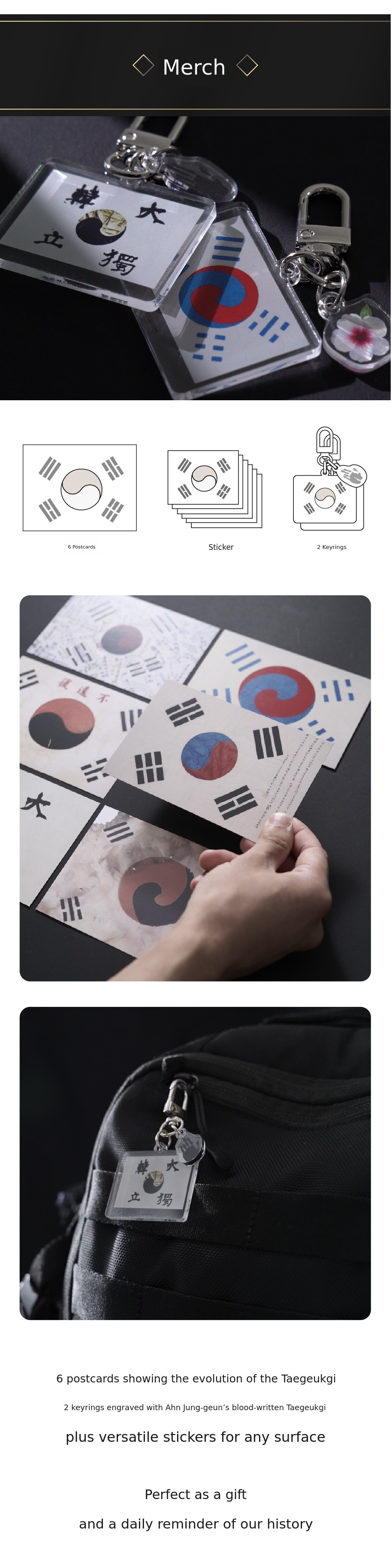
and goods (postcards, stickers, keyrings) that contain the evolution and meaning of the Taegeukgi.
Through this journey,we hope you will go beyond being a mere 'witness of history'and become a 'guardian of memory'.