 archplot
![[Comprehensive Edition][Paperback] The Definitive 'Korean Crime Archives' Sought After on Broadcast](https://cdn3.wadiz.kr/studio/images/2026/02/09/fb7eee02-958c-4f93-8712-313f4a47e608.jpeg)
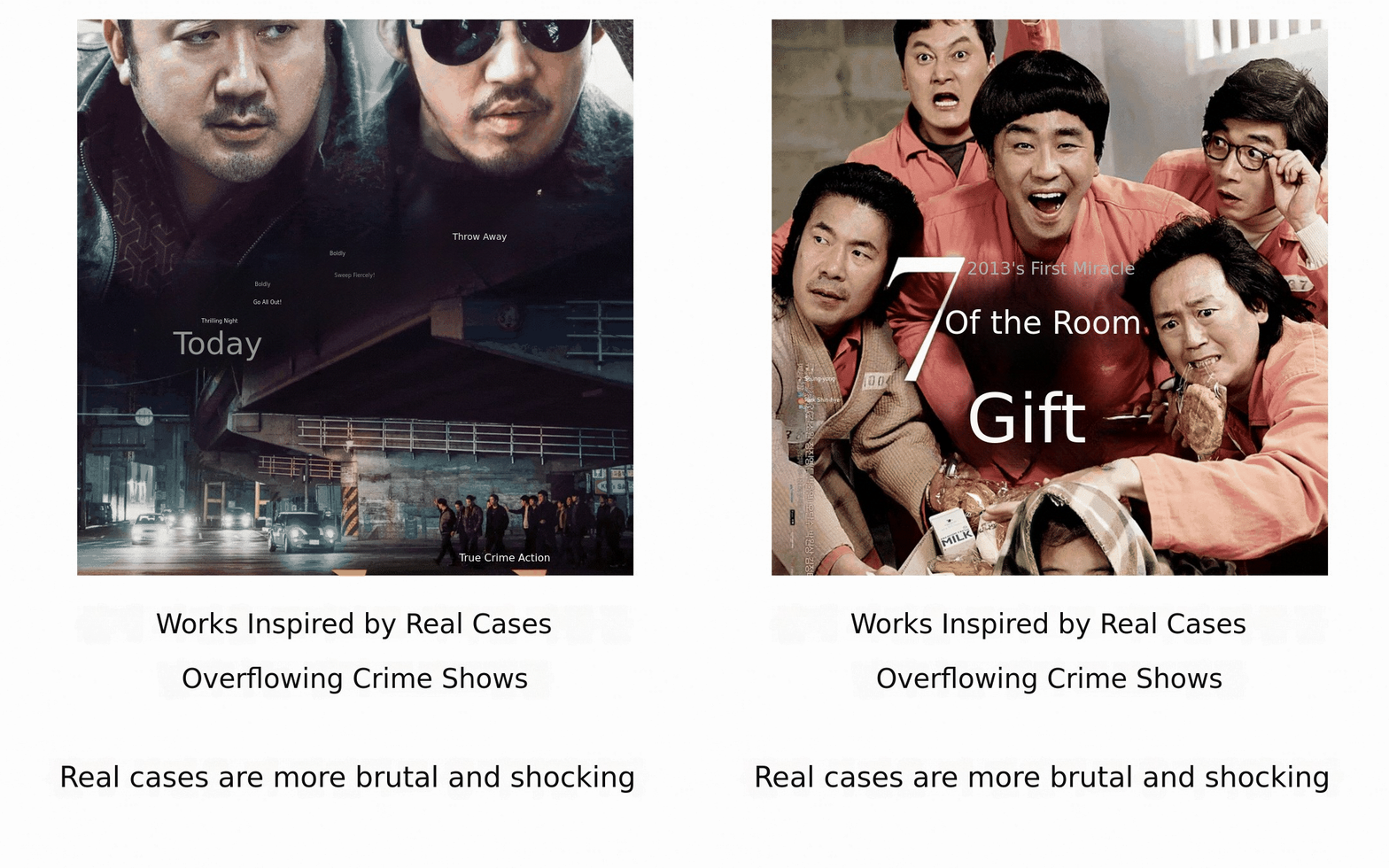
Most well-known movies, dramas, and novels began with real criminal cases.
Director Bong Joon-ho's <Memories of Murder>, Director Na Hong-jin's <The Chaser>, the blockbuster <The Outlaws>, <Catch Me If You Can>, <Dark Figure of Crime>, <Zodiac>, <Silmido>, <Silenced>, <The Case of Itaewon Homicide>, <Voice of a Murderer>, and many more.
These days, there are also many programs dealing with crime, such as <Unanswered Questions>, <Brave Detectives>, <Crime Scene Experts>, and so on.
'It would be great to have a case archive for creators.'
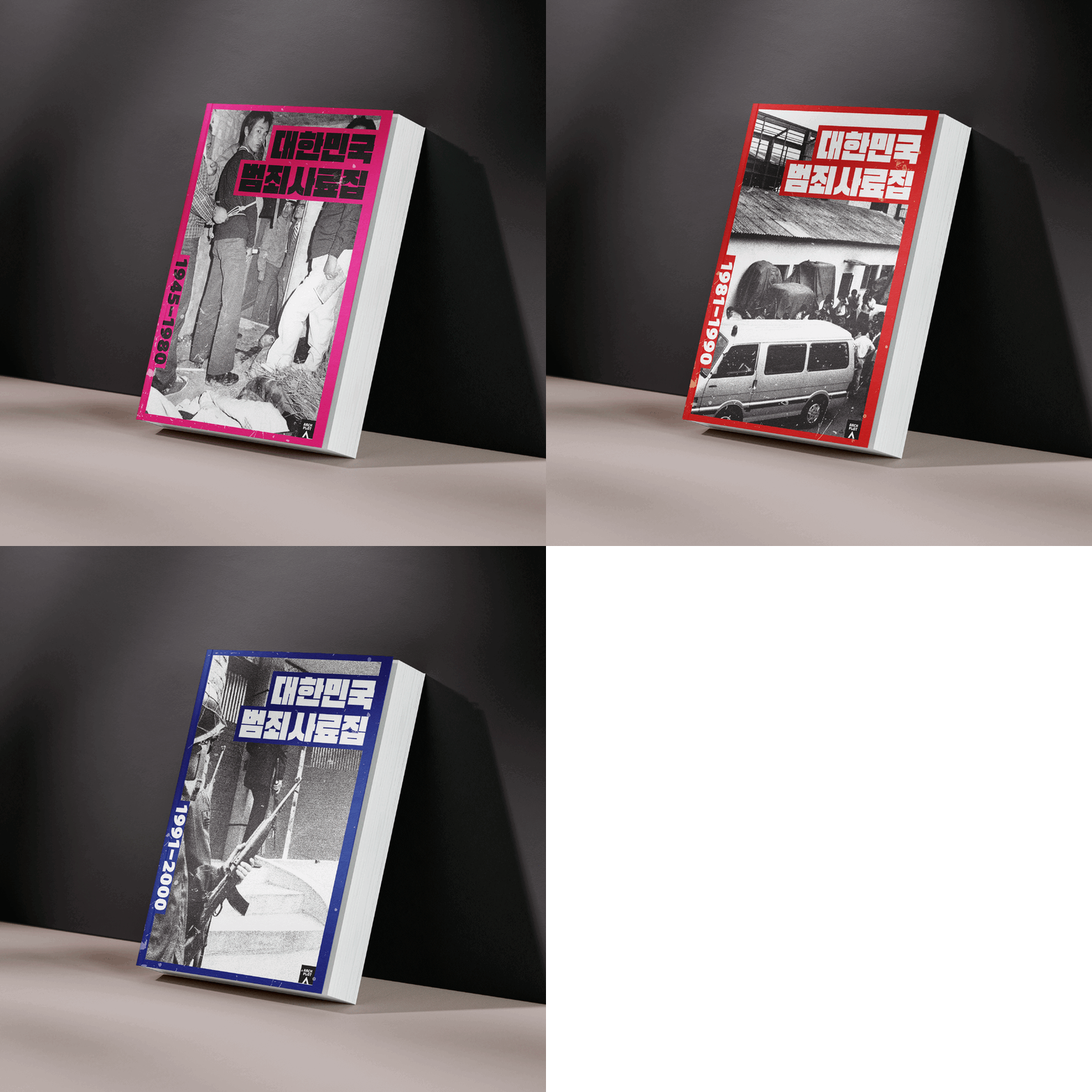
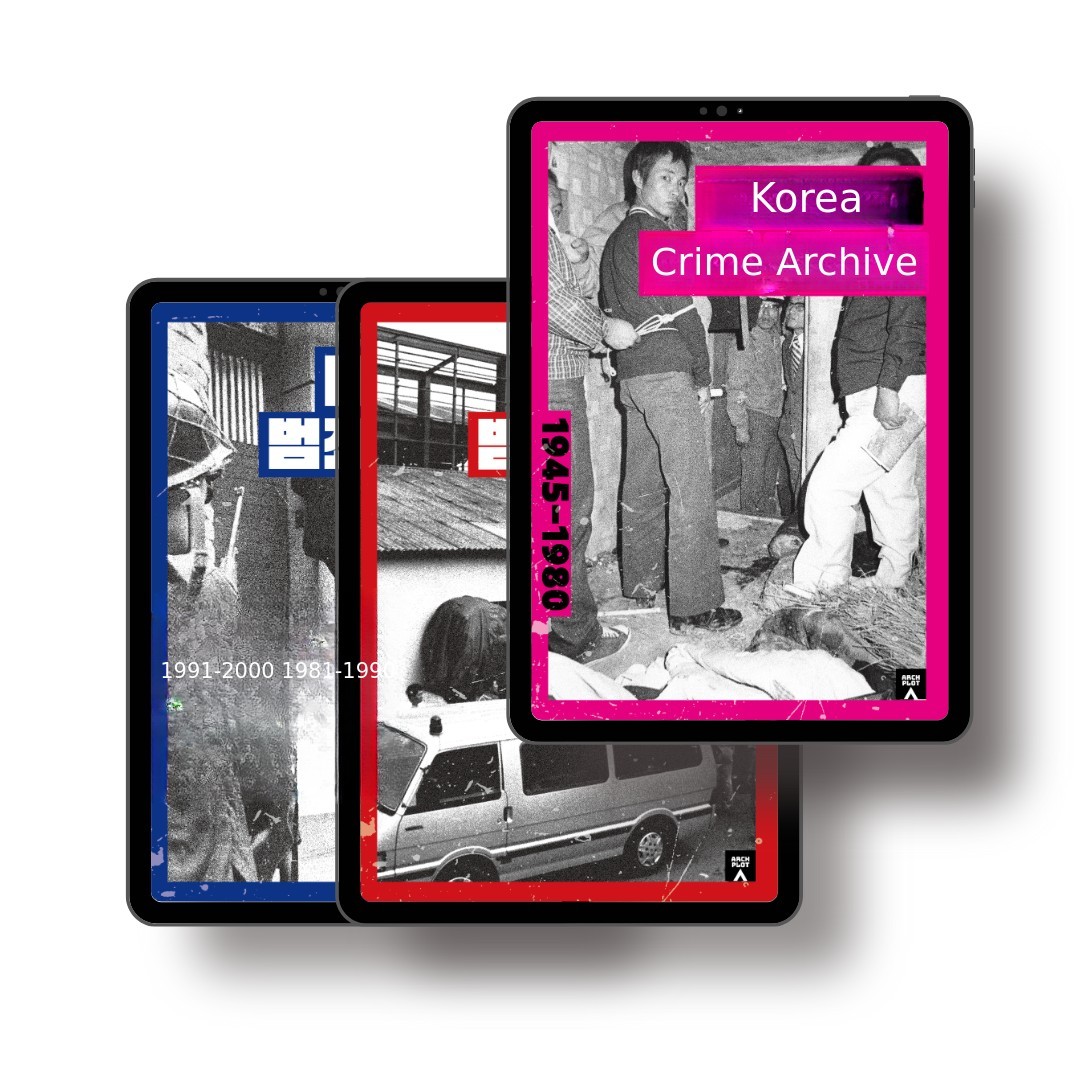
<The Korean Crime Archive> began from this very thought. That was in 2022. In 2023, we successfully completed our first crowdfunding, and by the winter of 2025, we finished <The Korean Crime Archive> (a three-volume set) covering crimes in Korea from 1945 to 2000. It was truly grueling work, and the sheer volume sometimes made it impossible to keep to the crowdfunding schedule. Above all, reading and organizing horrific cases for over four years was, in itself, a terrifying task.
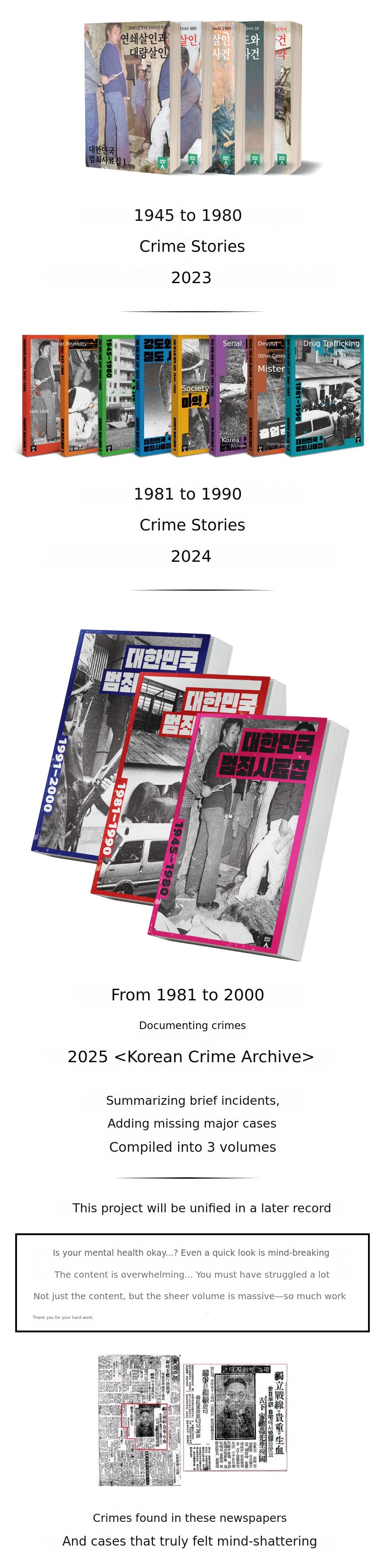
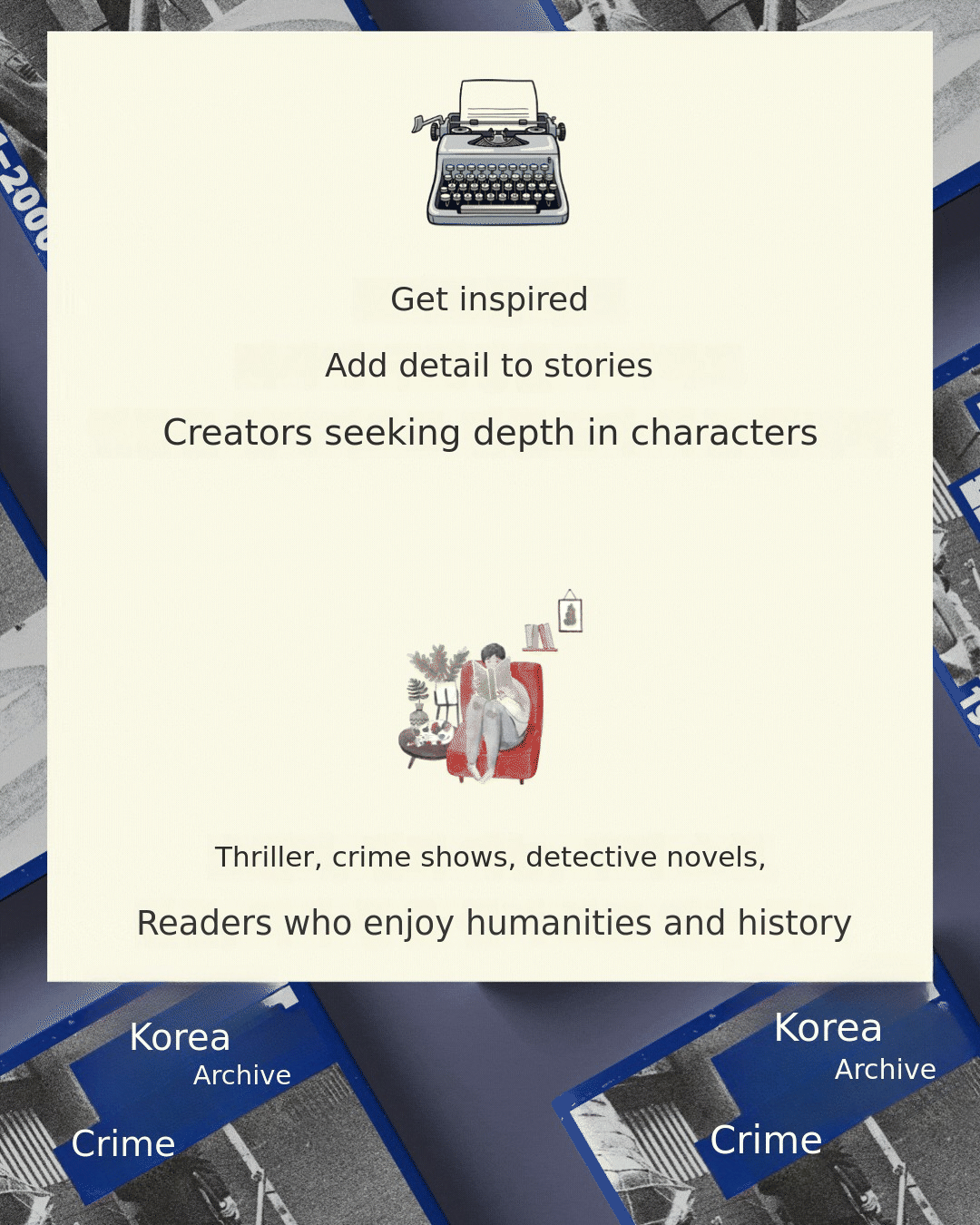
Although the archive was planned for creators, over time, people from various professions began to seek it out. Broadcasting professionals, writers, police academy professors, police officers, crime researchers, and perhaps most precious of all, ordinary readers who wanted to learn about crime and reached out to us first.
That is why this archive has been edited, organized, and written so that anyone can read it with interest.
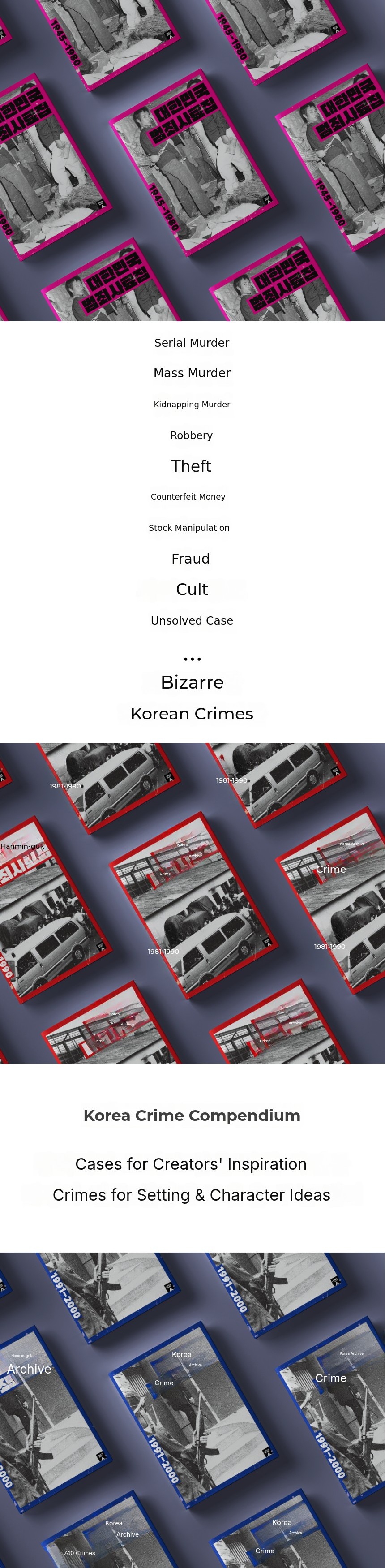
By understanding crime,
we can understand humanity and society.
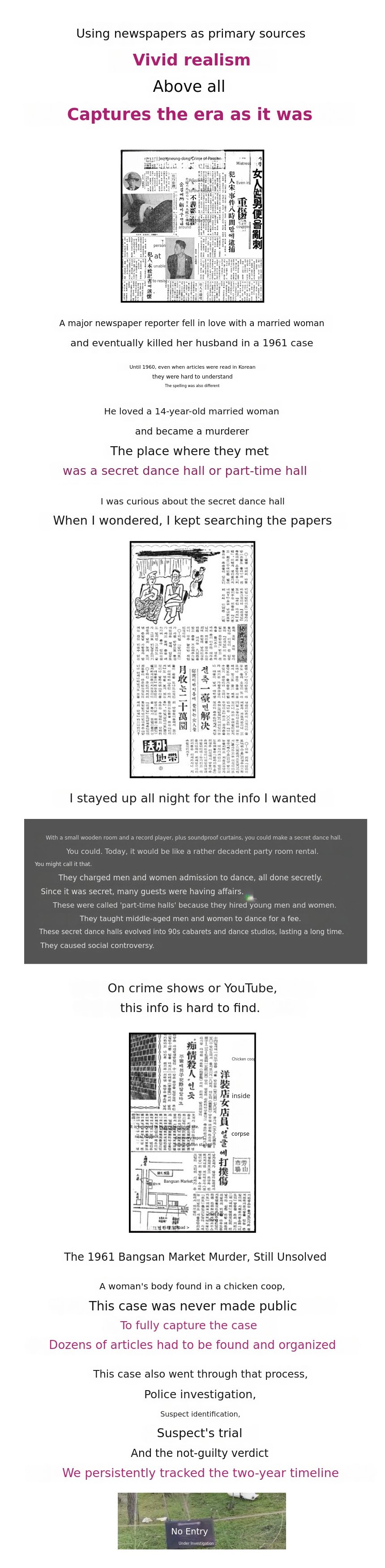
Arcplot has collected criminal cases that occurred in Korea from 1945 to 2000, spanning more than half a century. It was an arduous task. It was horrific, brutal, and heartbreaking.
During that process, we realized something.Crime is not simply a tragedy, but a record that reflects the changes of the times and the inner workings of humanity.
Immediately after liberation – Robbery and murder
Looking at crime records from right after liberation, the most common robbery-murders targeted 'cows.' Cows were the entire wealth of a household and their means of livelihood. There were a series of cases where merchants returning home from provincial cattle markets were attacked, their cows stolen, and they were murdered. Reading these crime records reveals just how desperate people's struggle for survival was at the time.
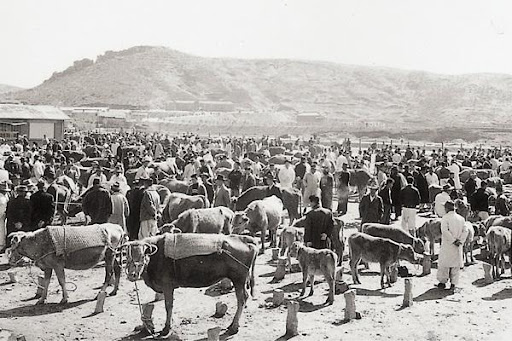
Up until the 1960s, there were also many robbery-murder cases. During this period, it was not uncommon for entire families to be wiped out in such crimes. Why was that?
When a robber killed all the members of a household, it was likely that the perpetrator was someone they knew. The 1963 family massacre in Siheung is an example. An assailant broke into the home of Mr. Kim, who lived in a place called Dongchang Valley, killed three family members, and fled. Mr. Kim's younger brother, who was hearing-impaired, was asleep and unaware of the commotion.
Despite being severely wounded, Mr. Kim managed to get outside the gate and shouted, "Fire!" before collapsing and dying. Startled by the shout, the assailant fled.
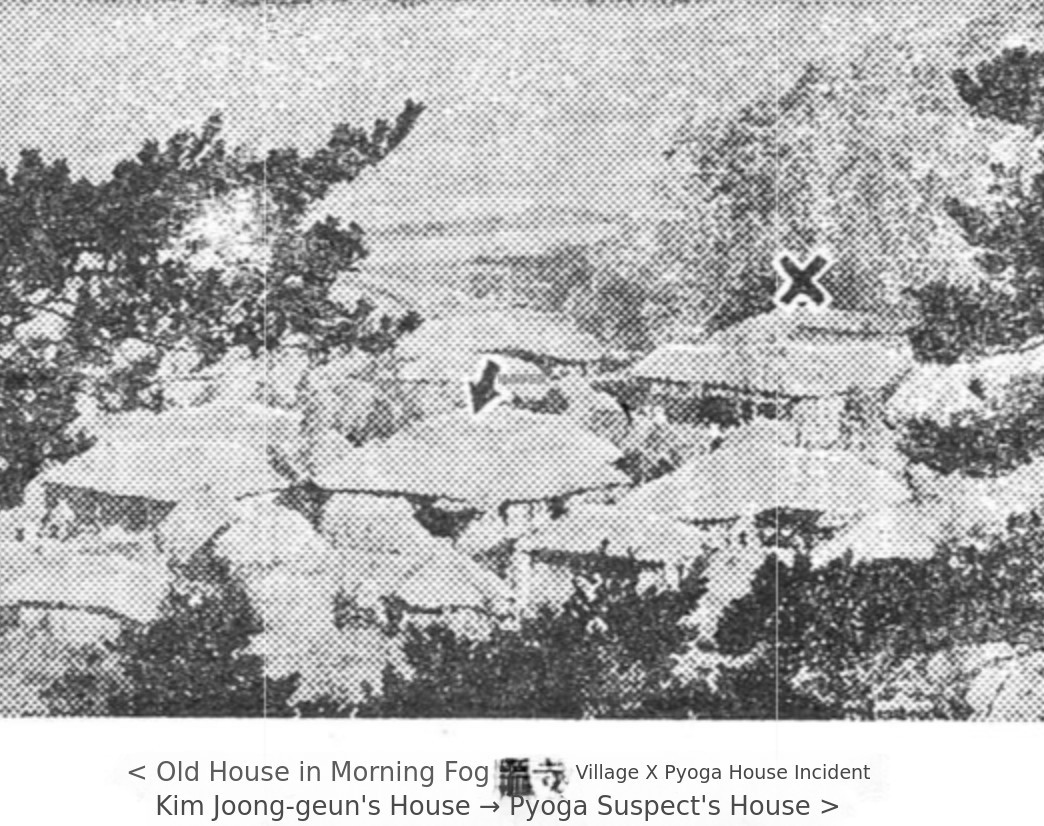
All the villagers came out to pursue the culprit. However, the assailant had already escaped. The police arrived and began their investigation, but the case showed no signs of being solved. Although Mr. Kim's hearing-impaired brother was suspected, there was no evidence against him.
As time passed, the culprit was caught due to evidence that was discovered 'by chance' (at the time, it was common for evidence or witnesses to be found by coincidence).
The perpetrators were Kim Wan-seon (21), a distant cousin of the victim who lived across the street, and former police officer Yoo Geun-chang (45). Kim Wan-seon broke into Mr. Kim's house wearing a mask, but when the victims resisted and his mask was removed, revealing his face, he killed the entire family. Kim Wan-seon even helped serve food at the victims' funeral.
Because this incident occurred around the same time as the serial killer Ko Jae-bong, the police initially suspected that he was responsible for this crime as well. However, at that time, Ko Jae-bong was on the run.
It was a time when, no matter how much public safety improved, it did not reach rural or remote villages.
In the cities, armed robbers appeared.
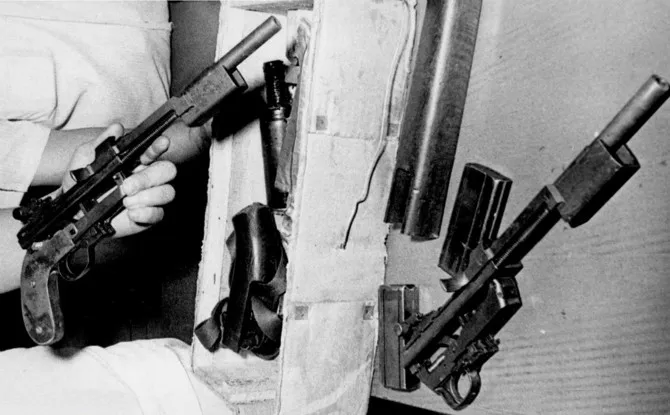
Right after liberation, robbers carried pistols, and after the Korean War, they appeared with carbines. At that time, the carbines were modified by removing the stock. This was so they could be concealed and used in crimes.
People flock to the cities
As time passed and industrialization began, the targets of crime also changed. Criminals started targeting expensive items of the time, such as radios, bicycles, and electronic goods. Incidents of people being killed just to steal a single radio or bicycle increased.
In the past, there were many cases where entire families were massacred in isolated houses. For just a few sacks of rice or a small amount of money, whole families were sacrificed. However, as urbanization progressed, the stage for crime shifted. Murders began to occur in the middle of crowded city centers, in apartment complexes, inns, and busy downtown areas.
In particular, there were quite a few maid murder cases. When the house was empty, it was often the maid who was left alone. Robbers would kill the maid and steal valuables before fleeing. While investigating these cases, I discovered that older apartments or houses used to have a 'maid's room.'
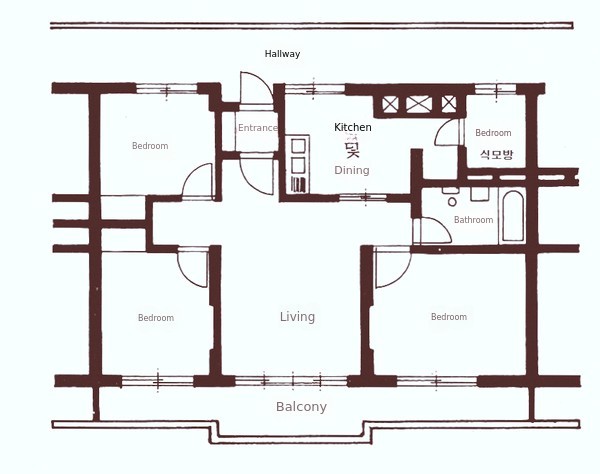
At that time, maids were paid very little. Their wages were only a third of their employer's allowance. The tragedy of leaving their hometown, coming to the city to guard a house, and losing their lives. It was heartbreaking.
The emergence of psychopaths
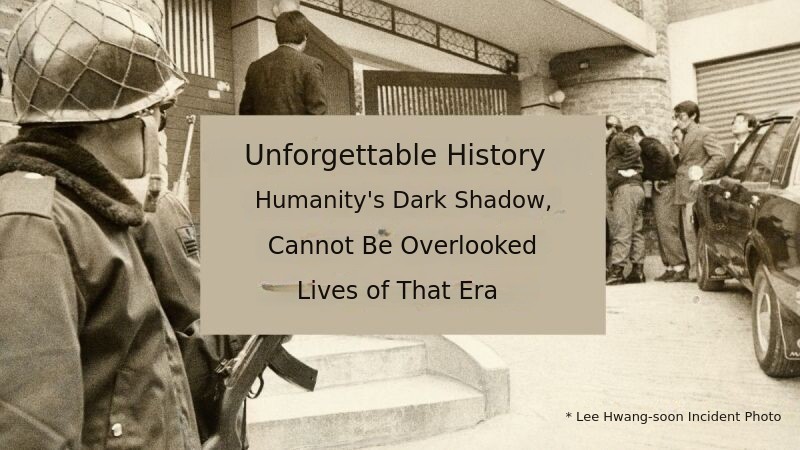
It was within this flow of urbanization and social change that we began to encounter new types of criminals. Namely,psychopaths as they are called. They did not commit crimes simply out of necessity or anger. These criminals appeared in society, enjoying murder itself and feeling pleasure from observing the suffering of others.
Cases not covered even by broadcasts
There are cases that have not been covered even by programs like <The Day the Tail Bites the Tail>, <Unanswered Questions>, and <Crime Scene Talk>.
<The Encyclopedia of Korean Crime> is a record that fills that gap.
From 1945 to 2000, newspaperswere combed through to uncover these cases.
· Cases that were previously unknown
· Cases we had forgotten about
· However, events that must be remembered.
This book was created with the mission to uncover such events.
It is truly a massive volume.
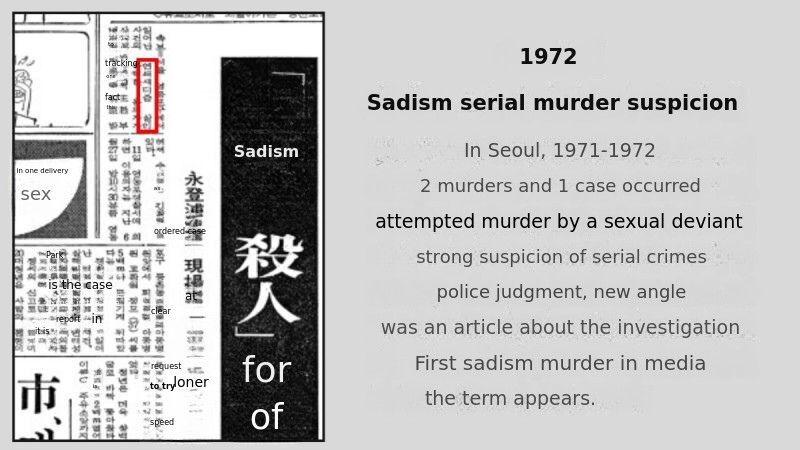
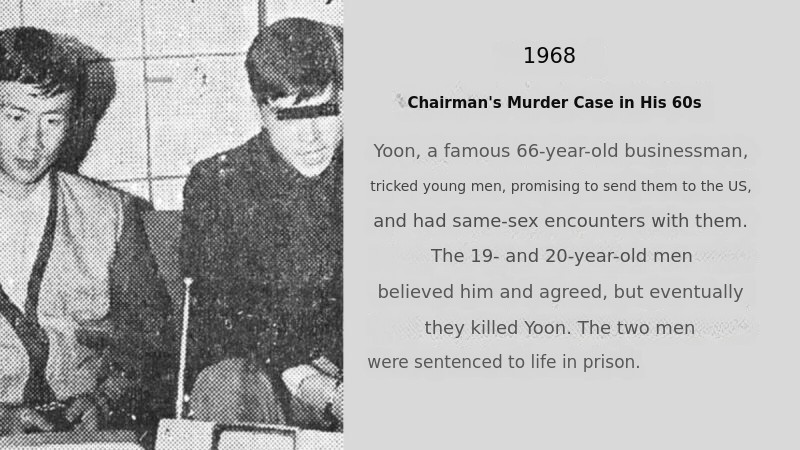
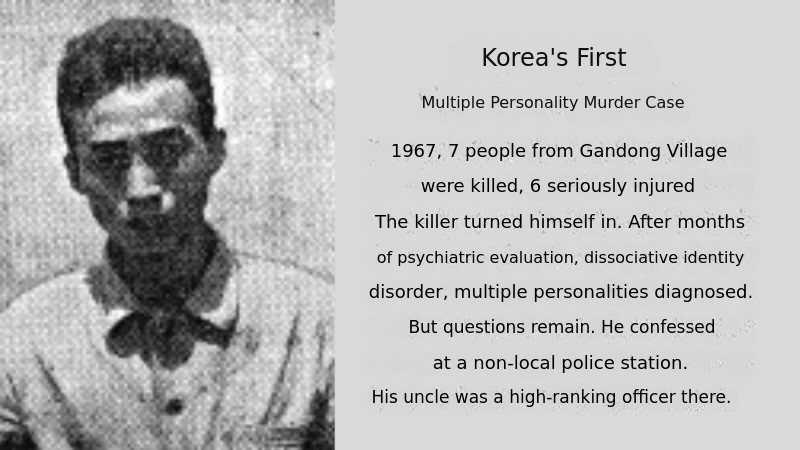
A time to reinterpret old records.
It took an unexpectedly long time to revise the early events. Although they were clearly recorded in Korean, the articles from the 1950s and 60s were difficult to understand and required interpretation.
For example, the article about the 'case of three people murdered in succession for money' reported in 1957 was difficult even to read. Long sentences without periods, unclear names, and articles with tangled grammar. The process of refining these materials so that today's readers can understand them was not simple editing, but more like translation.

<Korean Crime Archive>
Table of Contents
Volume 1 Table of Contents
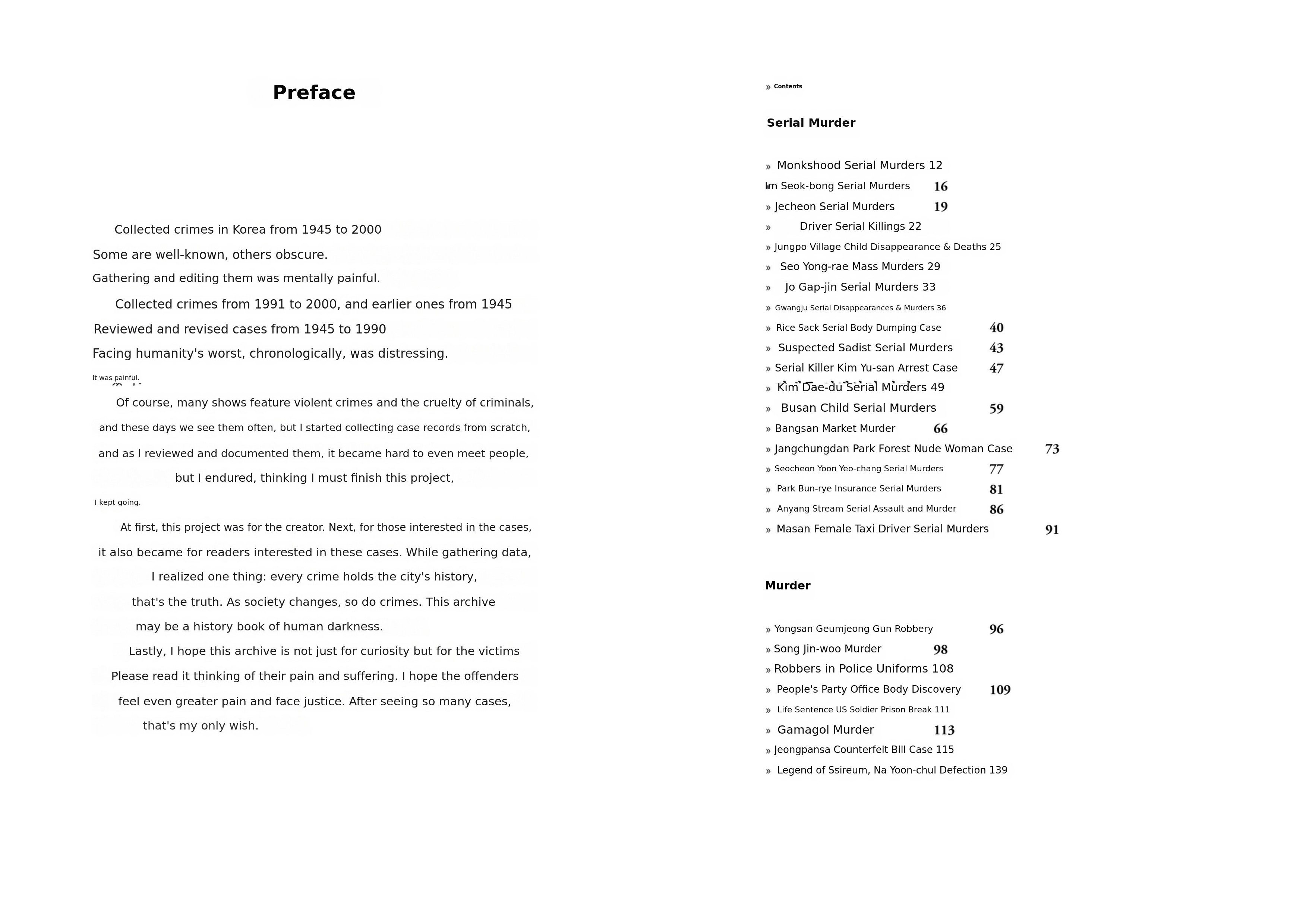
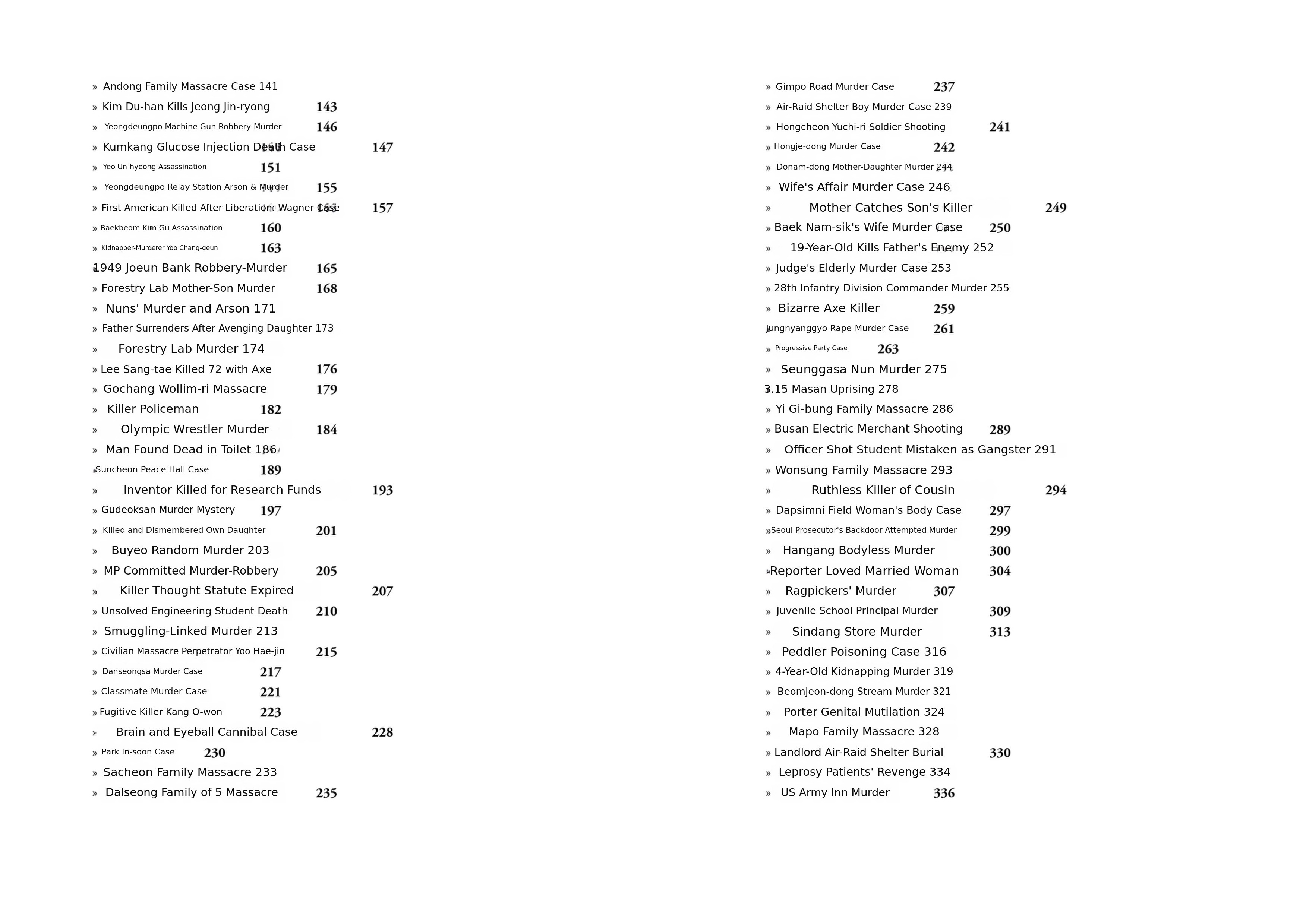
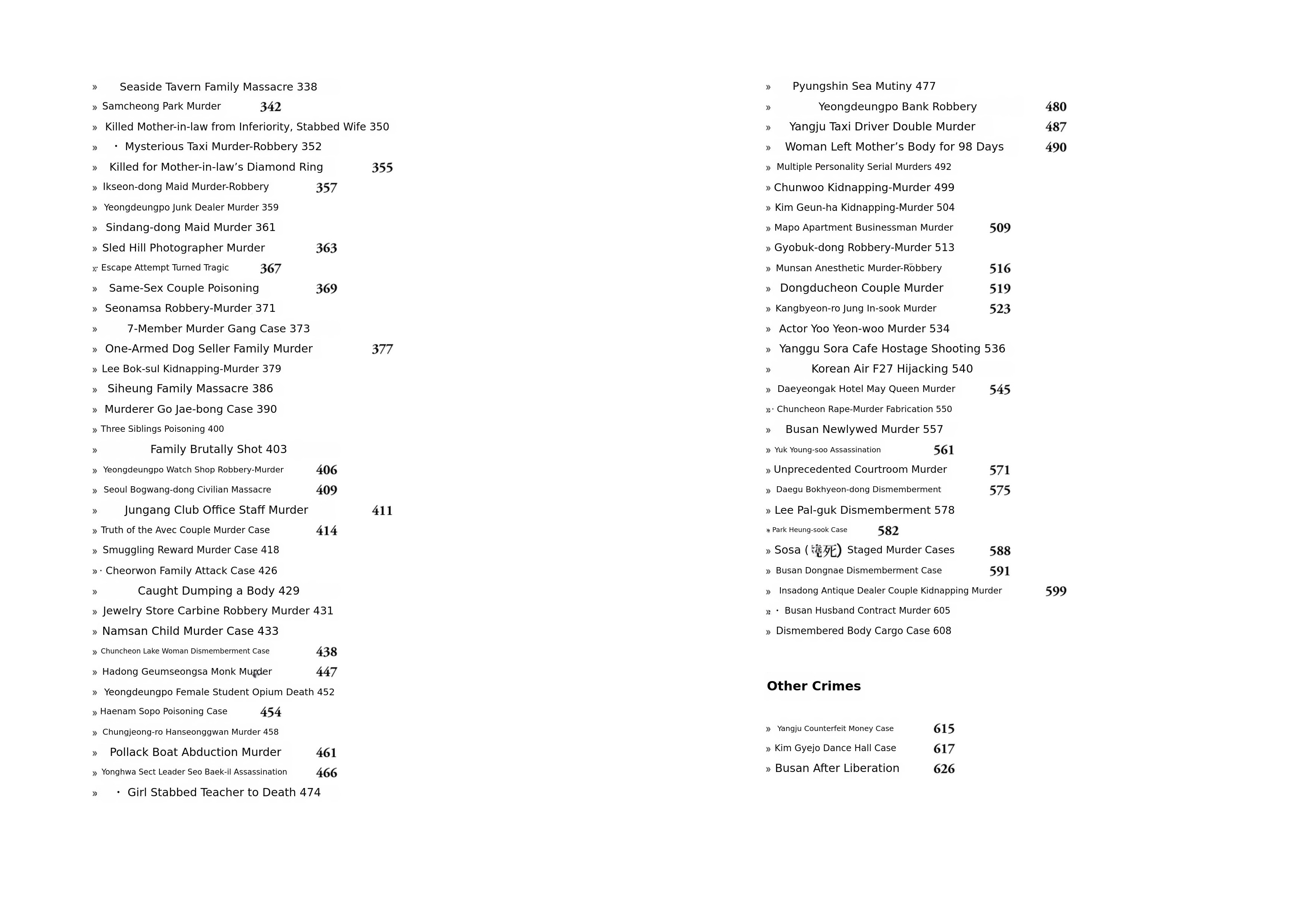
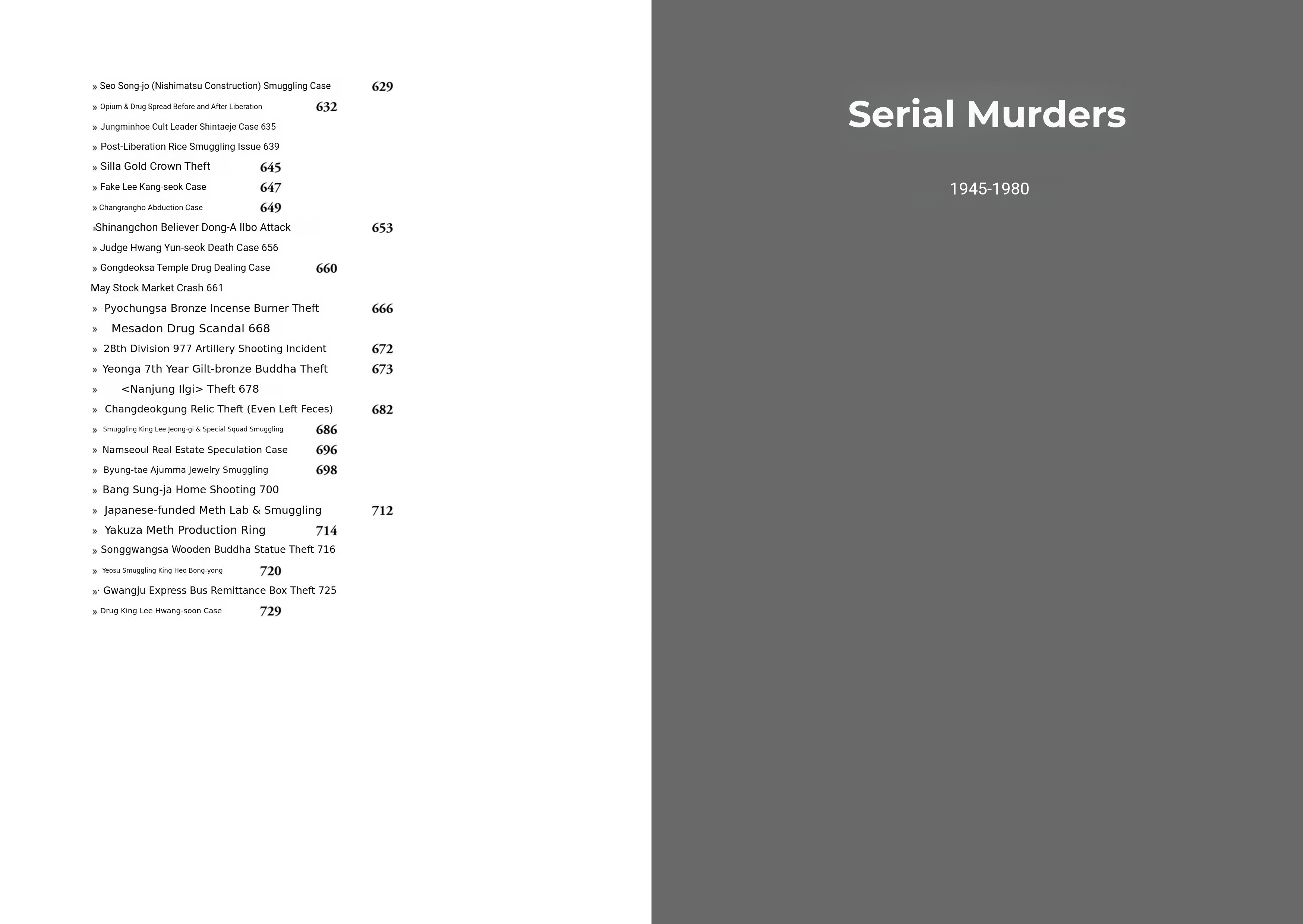
Volume 2 Table of Contents
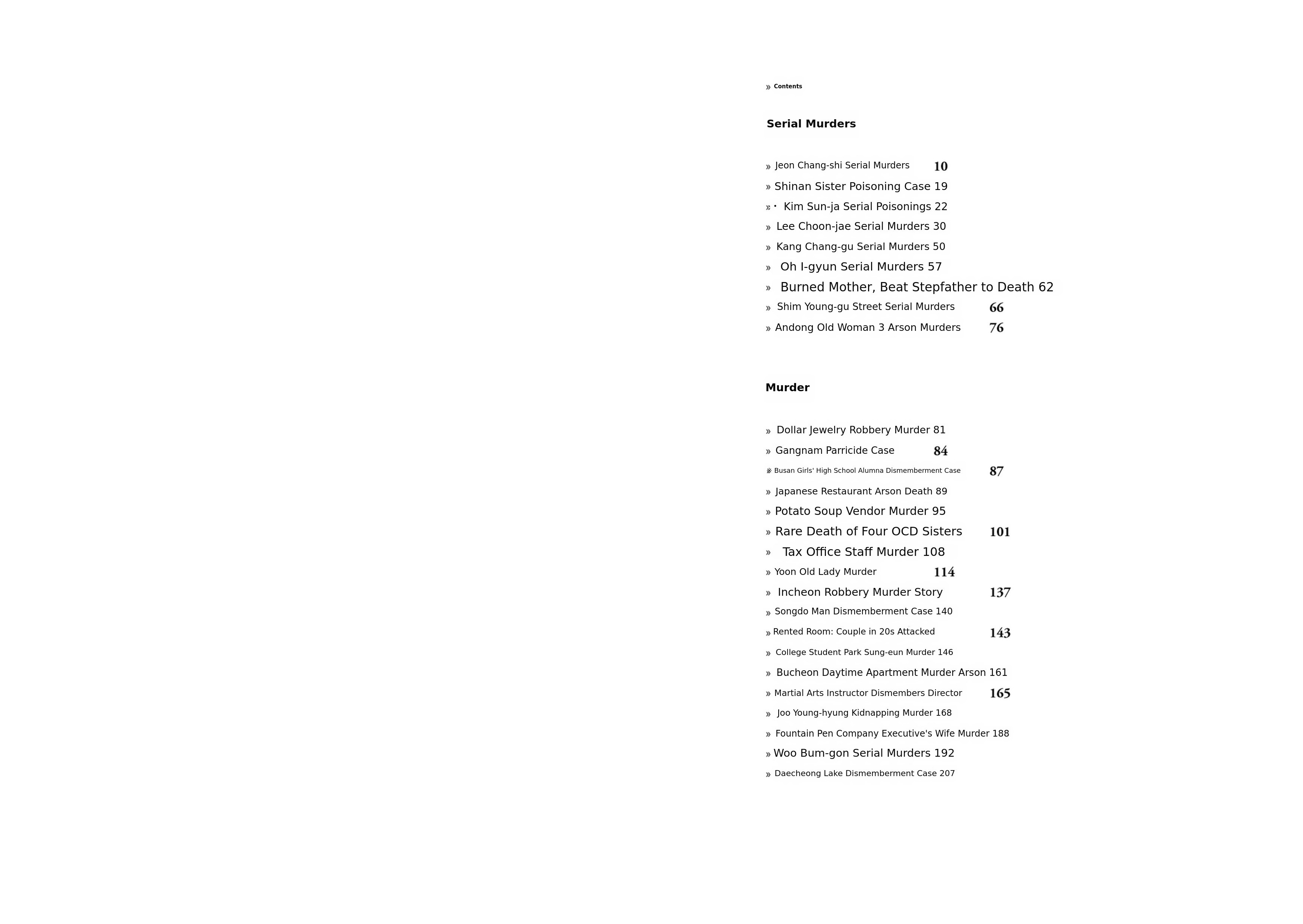
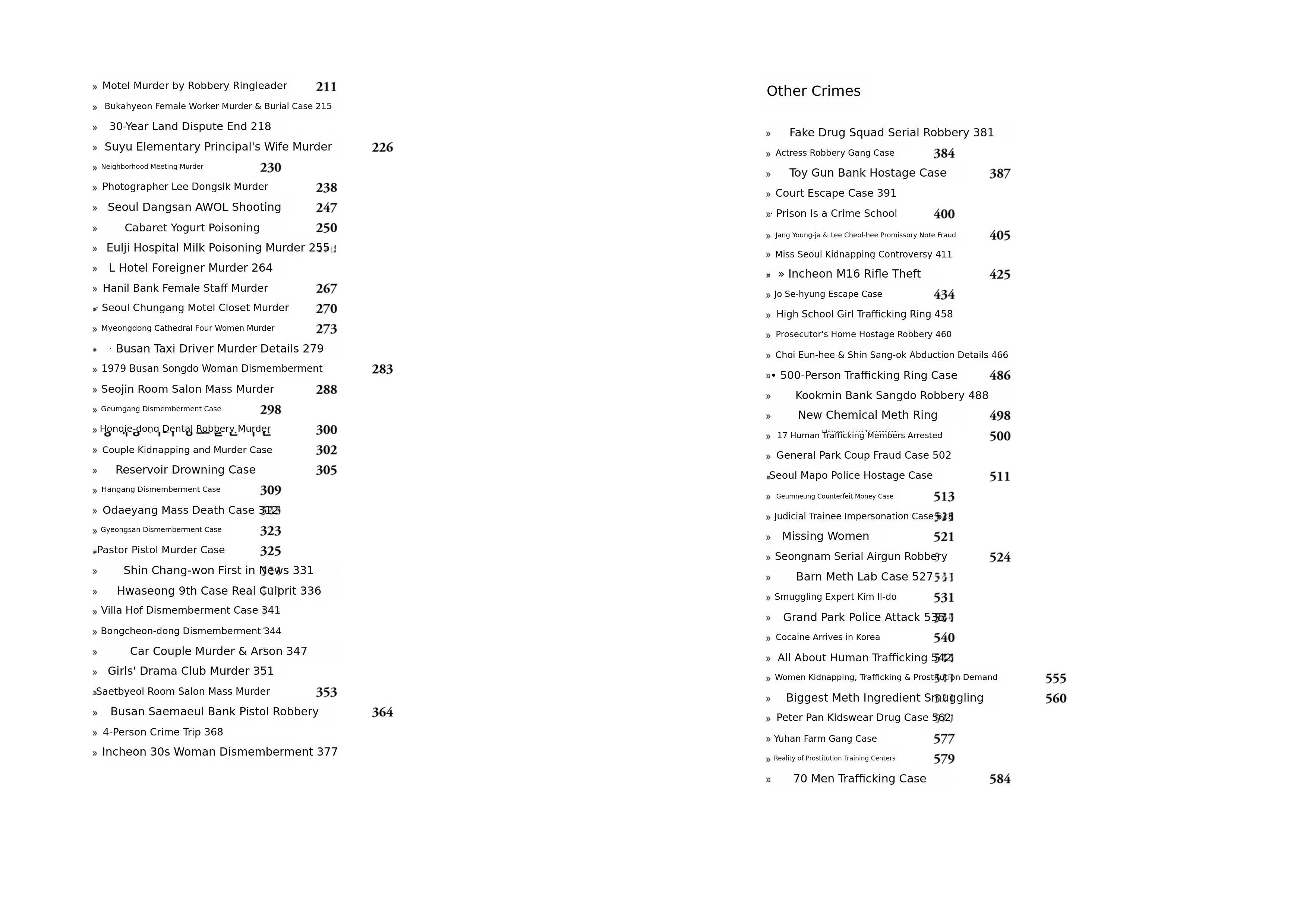
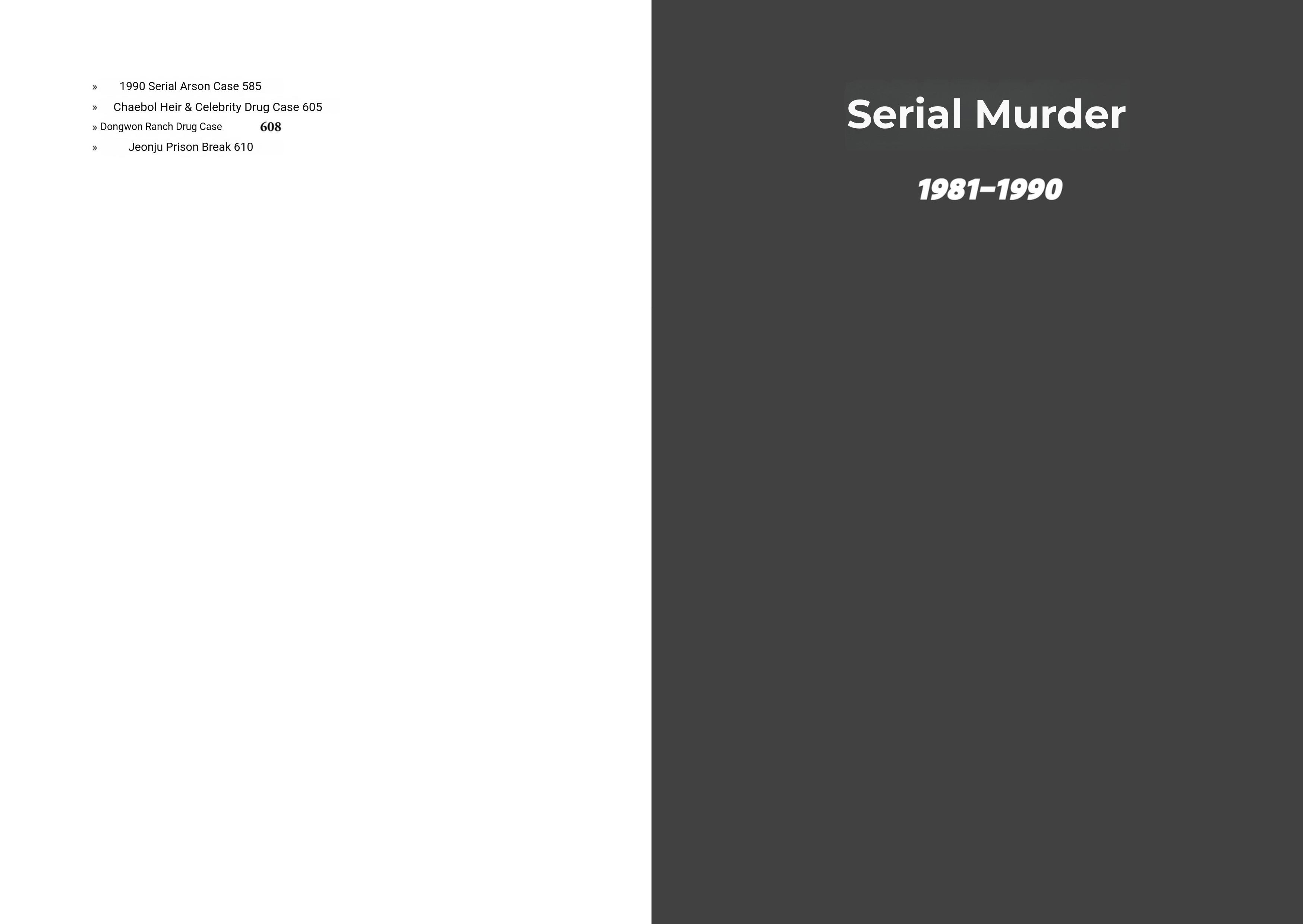
Volume 3 Table of Contents
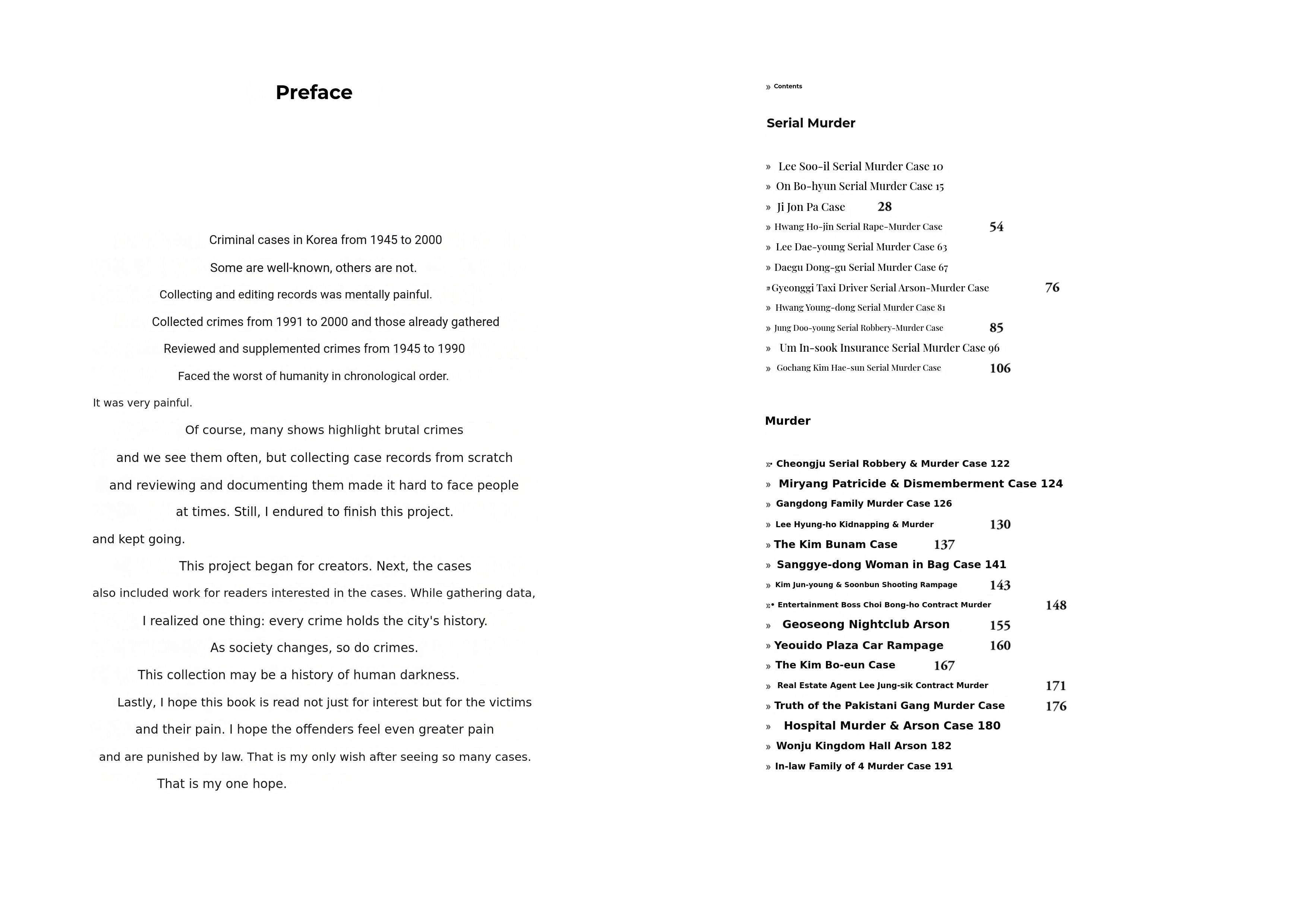
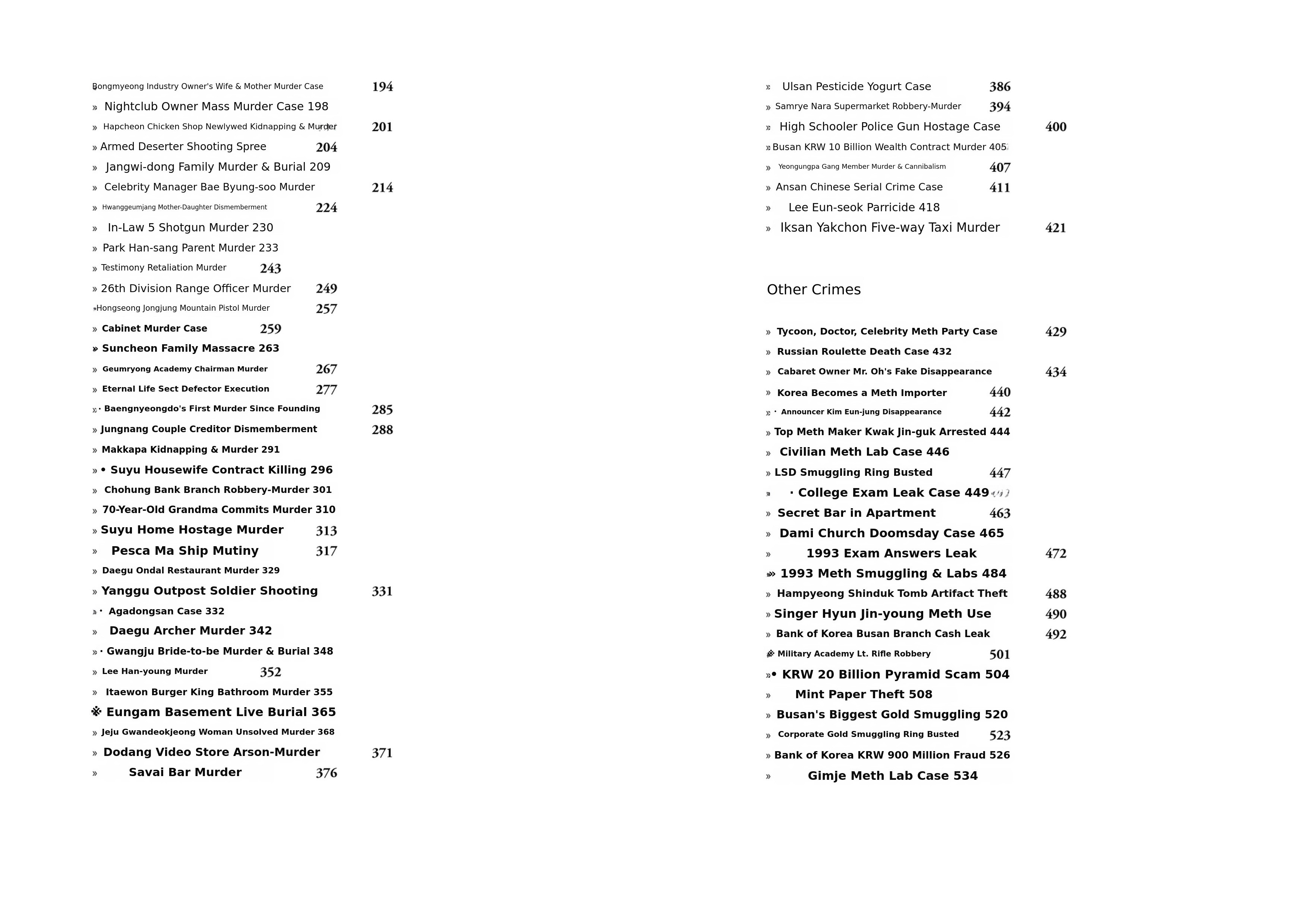
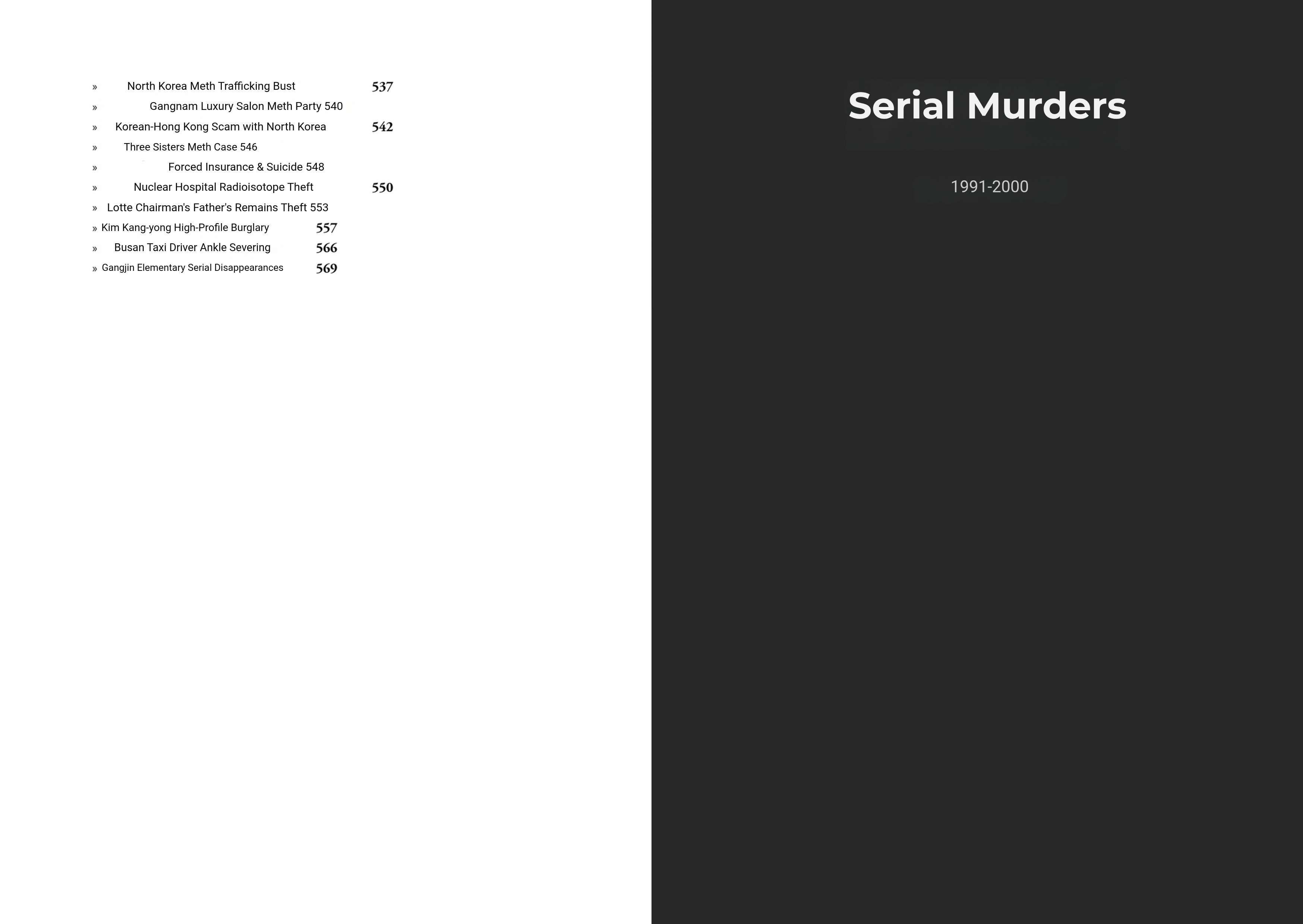
<Korean Crime Archive>
Cover Preview
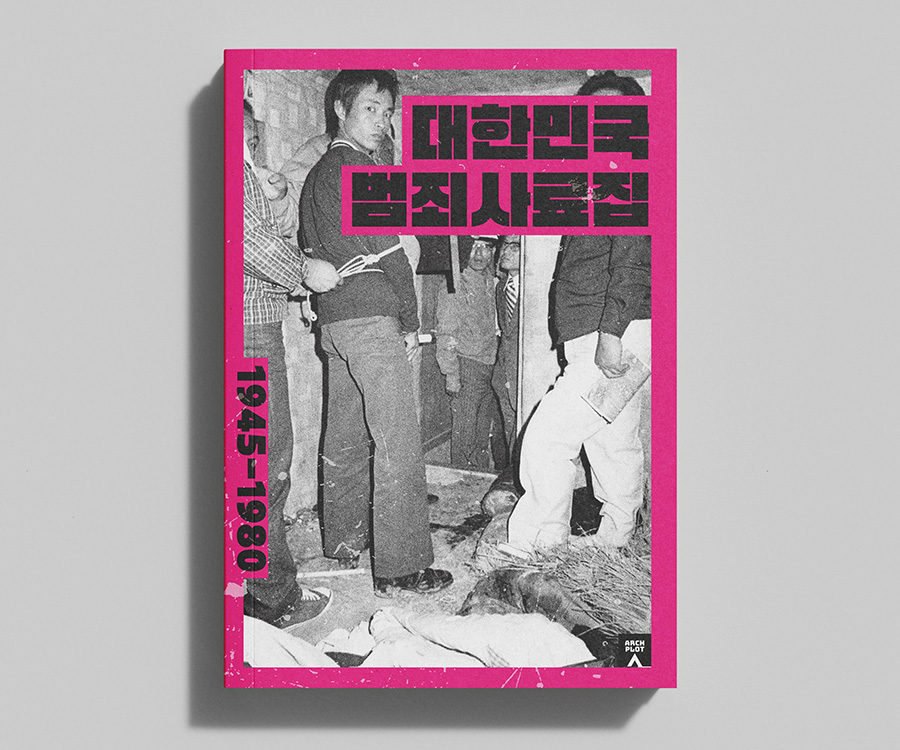
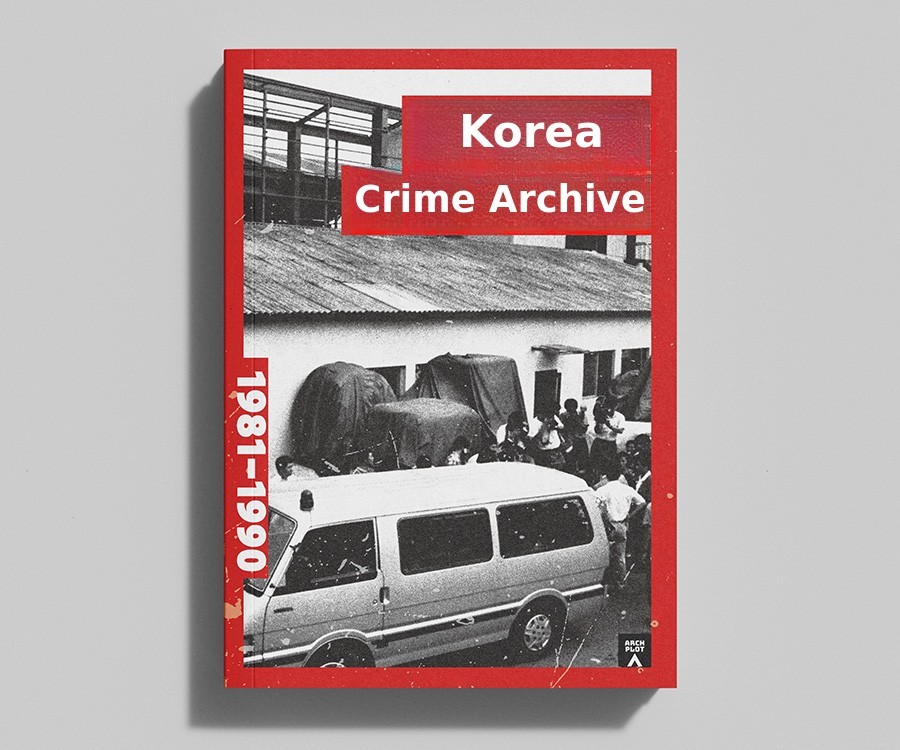
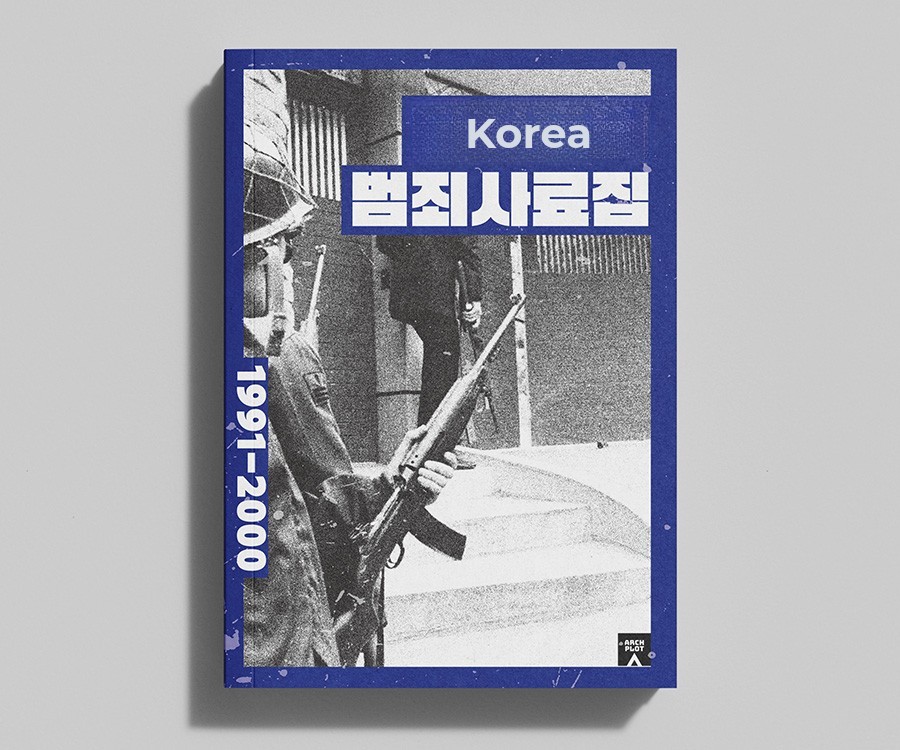
<Korean Crime Archive>
Content Preview
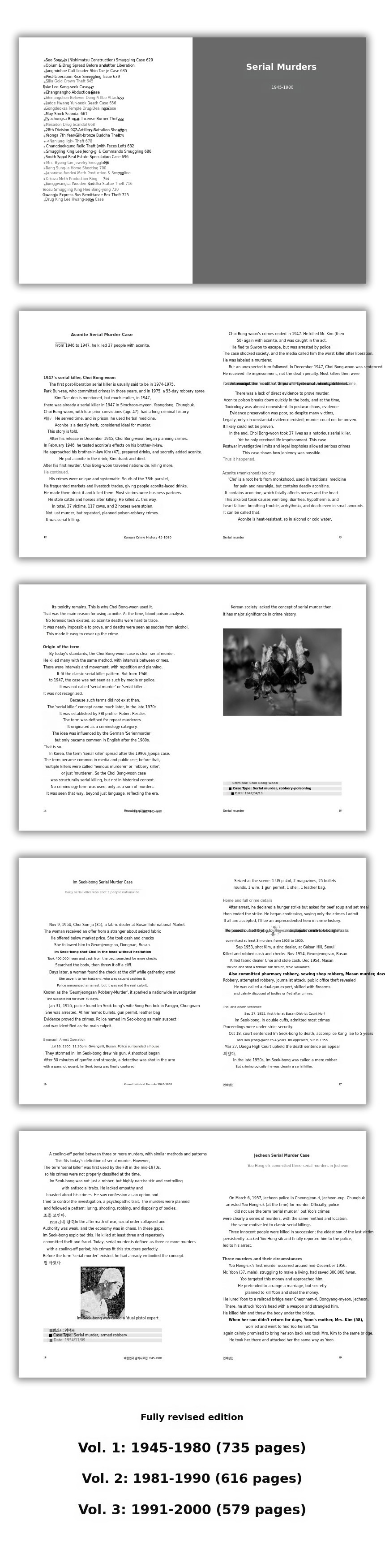
*Paper book - Cover: Snow 250g | Content: Mimo 80g
*E-book - PDF
Additional Rewards
For creators seeking inspiration
A comprehensive collection of motifs
<Collection of True Stories from Korea>

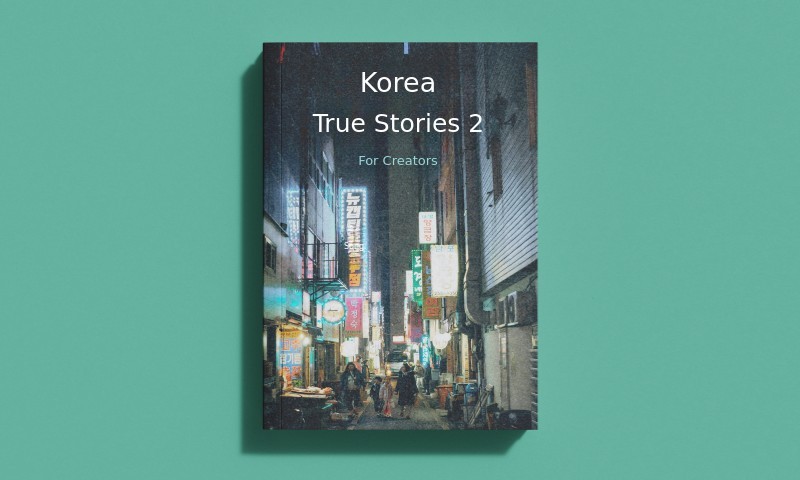 *The Collection of True Stories from Korea (2 volumes in total) is a PDF e-book.
For creators struggling with what to write,
Have you ever felt frustrated when writing novels or scripts, unsure of 'what' to write about? Or have you ever written a large amount only to think, 'Ah, this isn't it,' and then searched for a different subject? Many writers I have met have experienced this.
The longest time writers spend worrying when writing is about 'what should I write?'.
We call the 'what' in 'what should I write?' a subject, material, or motif.Have you decided on 'what' to write now? Are you ready to trust that decision and write to the very last period?
Blocked from the very question of 'what should I write?'
For creators,I thought about what kind of help I could offer.
When I was a literary editor, I enjoyed discussing with writers about 'stories that would be good to turn into novels.' Stories read in newspapers, stories circulating in society. Some of these became published novels, and some even led to movie contracts.
So, what if I provided creators with a collection of such stories?
That is why I created the <Collection of True Crime Stories from Korea>.
This collection selects stories from tens of thousands of articles published in Korean newspapers and magazines that would be great to use in novels, movies, or dramas.Crime, culture, sports, disasters, science, society, politics, economy, love, mystery, people I have carefully selected and included these stories.
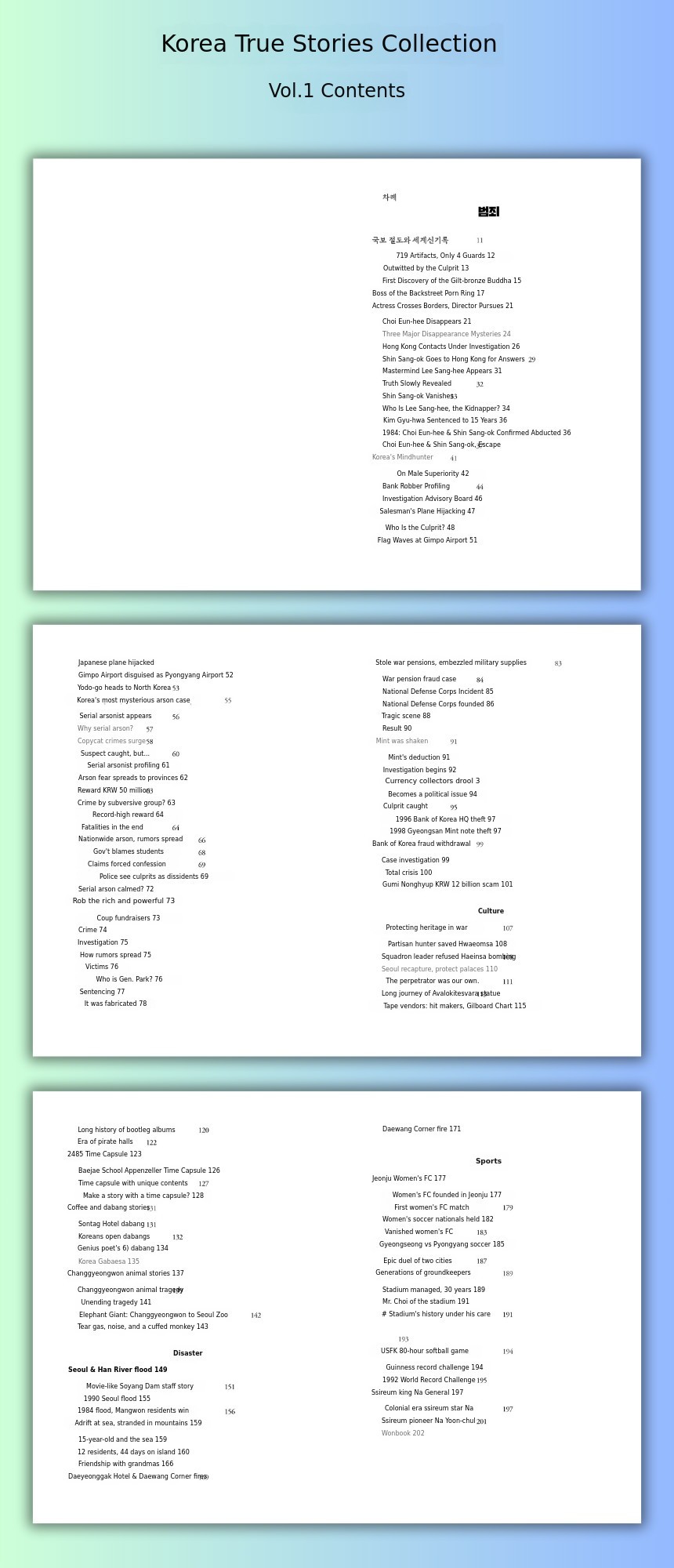
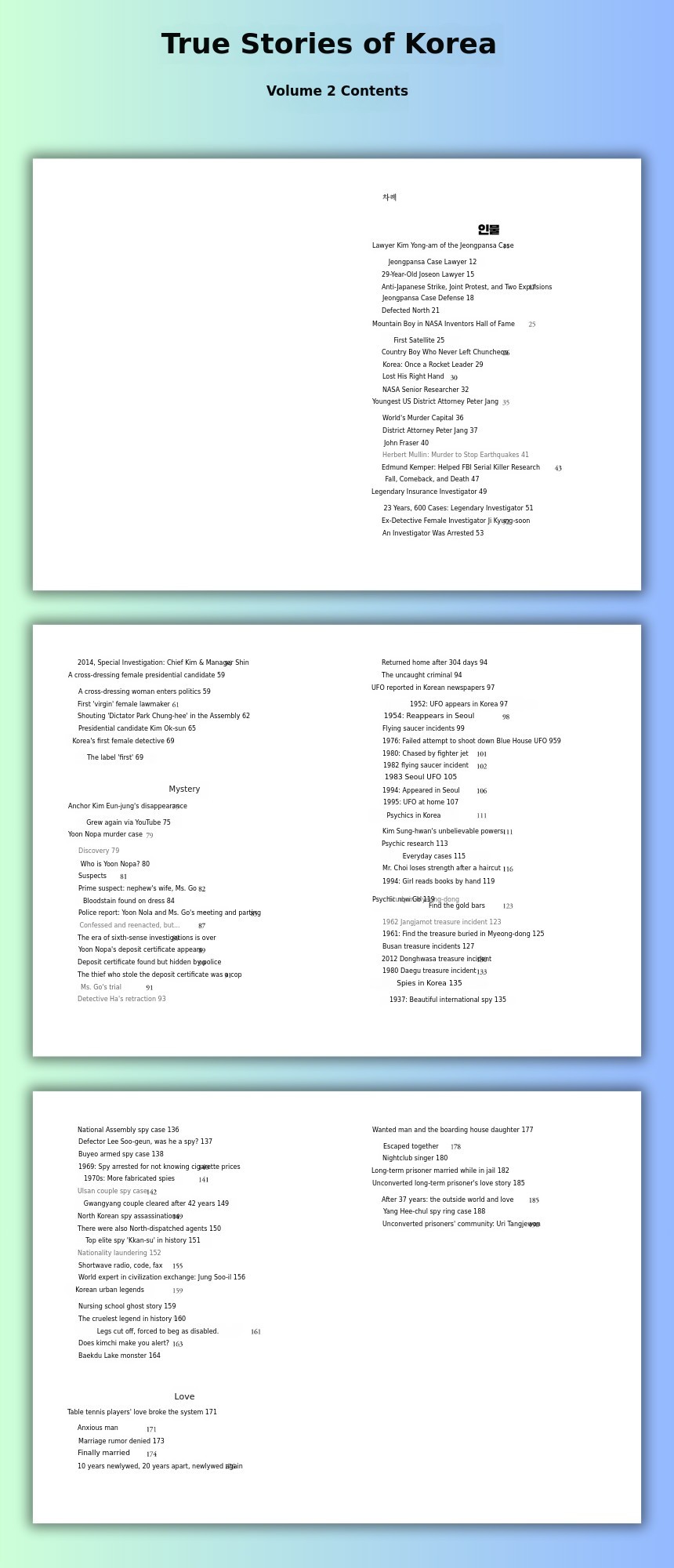
Reason 1 to choose the collection of true stories:
You can get inspiration from real people and real events.
For example, how about a story like this?
In Korea, introducing oneself as a 'detective' was legally prohibited until 2020. That is why there were not many stories dealing with detectives.
However, in reality, there were people whose work was closest to that of a 'detective.' They are 'insurance investigators.'
On June 16, 1996, a newspaper featured the story of a legendary insurance investigator (the newspaper referred to him as an investigator), Mr. Park. Mr. Park's official title in the article is 'Insurance Claims Review Investigator.' He was a veteran who specialized in uncovering fraudulent policyholders who tried to claim large insurance payouts by cleverly faking death or illness.
He even went undercover and disguised himself in rural villages to catch people trying to fraudulently claim death insurance payouts. Among his cases, there was even a murder case.
A man in his early forties, an alcoholic living in a vinyl house in Jamsil, Seoul, died in an accident after being run over by a train in Hongcheon, Gangwon Province. The deceased's younger brother was the beneficiary of the insurance, and after burying his brother, he filed a claim for the insurance payout.
There were as many as five insurance policies, all taken out by the younger brother. So Investigator Park requested a formal investigation by the prosecution. When the body was exhumed and autopsied, signs of strangulation were found. The younger brother was arrested for familial homicide.
Investigator Park, featured in this article, solved an astonishing 600 cases over 23 years.
He is truly a legend in this field.
If you were to write a story inspired by this person's article, what would the logline be?
'A legendary retired insurance investigator living in the countryside hears the unfair story of a fire incident in the town, and while investigating, uncovers a massive fraud involving politicians (or corporations).'
There are quite a few movies and novels featuring 'insurance investigators.' The first that come to mind are the film <Black House> and the drama <Inspector Koo>.
Creating a work with a story that has never been told before is difficult. However, if there are existing works to reference, you can study how the story was developed, why it succeeded, or why it failed.
Reason 2 to choose a collection of true stories:
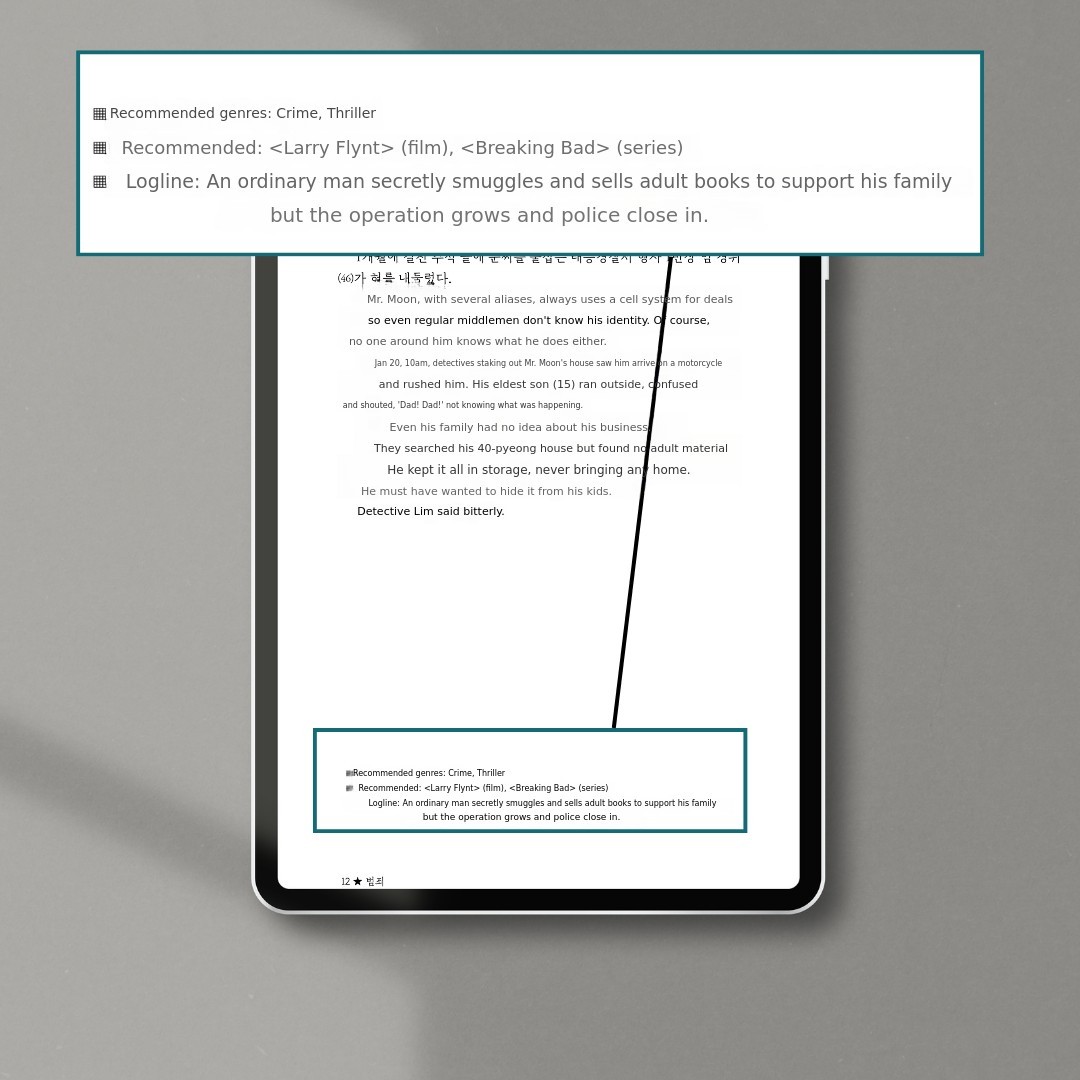
Suggesting recommended genres, works, and loglines.
The story of a man caught smuggling and selling obscene books in 1983.
Let me show you how the 'logline' and 'reference works' were included using this case as an example. This was truly a story I wanted to use myself.
This is the story of Mr. Moon, who was caught selling a huge quantity of obscene books (such as <Penthouse> and <Playboy>, which were not distributed in Korea at the time). In fact, there is not much information about Mr. Moon.
Because of a few keywords, I thought it would be interesting to properly craft a story from this case.
1. Mr. Moon ran his distribution network as tightly as a drug cartel.
2. Moon's family did not know that he was making money from such activities.
3. Moon used several aliases and thoroughly disguised his identity.
However, no matter how interesting I find a story, someone else might think, "This?"
Therefore, at the very end of the main text containing cases or true stories, I have included recommended genres, recommended works, and a logline (the story logline as conceived by Arcplot).
This could be the most important point for choosing this collection.
Although I called it a 'logline,' in fact, it is more like 'it can be thought of in this way.' Every creator's imagination is different, and since hobbies, tastes, and lives vary, completely different works may emerge.
Please refer to the following.
Three reasons to choose the true story collection
A variety of stories that make people laugh and cry
Sometimes, when thinking of true stories, people only think of crime. However, there are countless stories that can inspire.
In the field of sports as well,there are <Forever the Moment>, <Take Off>, and <Korea>. Some may wonder if almost every sports anecdote has already been made into a movie.
However, if you diligently search old newspapers, you will find more interesting material than you might expect.
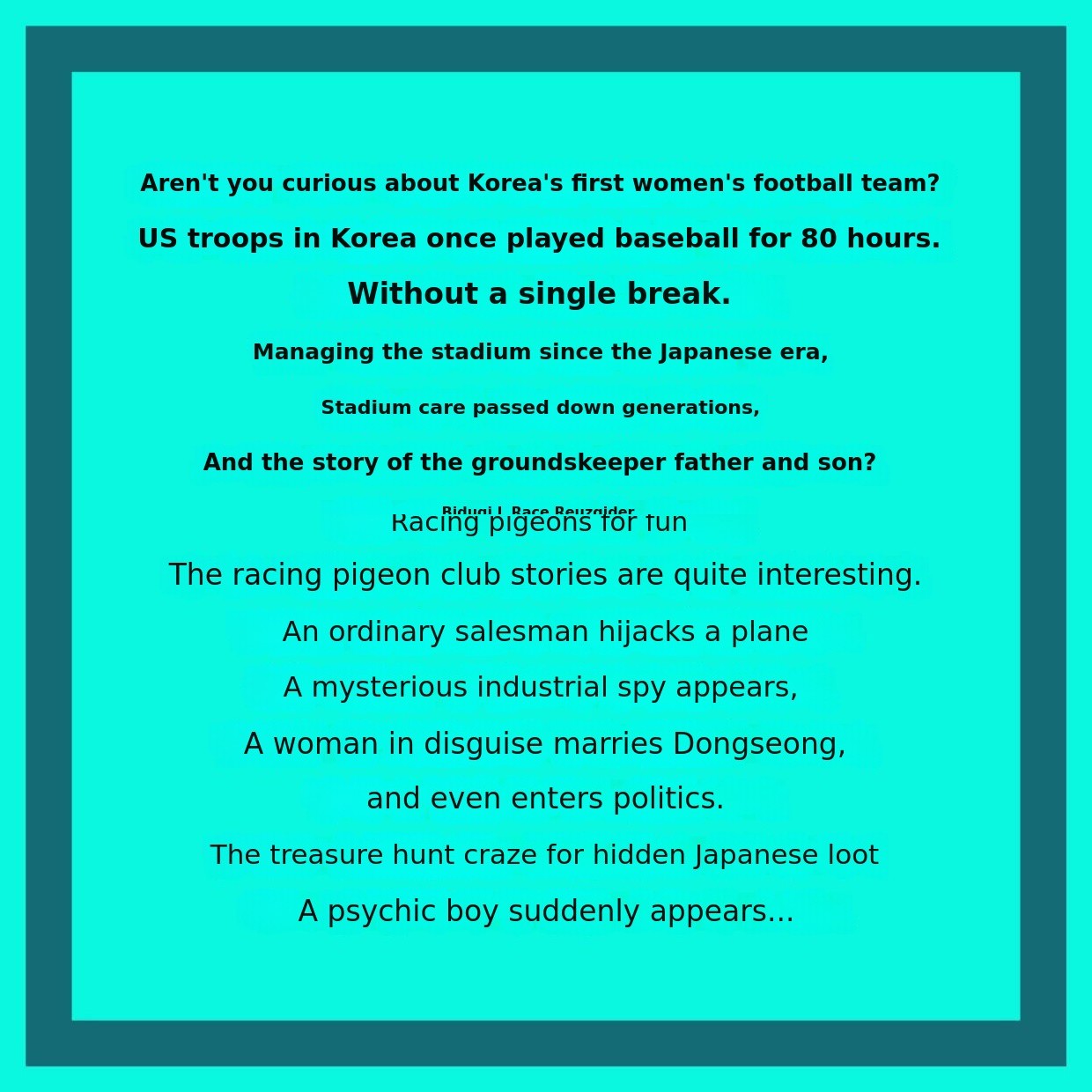
In the field of culture I was also able to find interesting articles.
Do you remember the street carts that sold cassette tapes of hit songs in the 1990s? There was even an article about these vendors. The article talked about the vendors' ability to 'predict hit songs.'
In other words,to make more sales and earn more money, they had to edit and sell tapes predicting hit songs faster than others.
If you were inspired by this article,Logline what if you created one?
"A street vendor with an extraordinary ability to predict hit songs sells music tapes, accidentally hears an unknown singer's song, and together they join forces to take on the music industry."
We also put great effort into the people section. Dr. Sanghyuk Choi, the first Korean inducted into NASA's Hall of Honor, and Peter Jang, the youngest district attorney to prosecute American serial killers, have stories you won't find in the media.

Four reasons to choose this collection of true stories:
Expert in collecting materials for creators
The previous project, <Korea Crime Archive>, required extremely challenging work. Instead of the promised one volume, it ended up as a five-volume set, and the deadline was delayed.
During the process of collecting materials, I had to go through countless trials and errors. I had to read through almost indecipherable newspapers from that time.
Since it was all about crime, reading so many cases almost gave me nightmares.
However, through that process, I learned the know-how to collect materials helpful for creation,and now I have become an expert in material collection.
Some might say, collecting materials? Isn't it just about finding them?
That's right. You just have to find them.
But just as important as finding materials isfirst, having an eye for selecting materials.
You can't include every single story from 1 to 100 in a book.You need the ability to select materials that can serve as motifs for movies or novels. By organizing crimes from 1945 to 1990, I developed that eye. While compiling those crimes, I collected true stories that would make great movies or novels.
Second, it is to organize the collected materials and also find and organize related materials contained within the event (story).
Anyone can find and organize materials if they spend enough time. However, there are always parts that get missed, even with effort. These are the parts you miss if you only look at the article or material itself.
I am a very curious person. If I don't understand something, I look it up.For example, what was the social atmosphere like at the time, why was this anecdote such an interesting event back then, what was the political situation, what were the prices like at the time... These are the kinds of things I mean.In other words, just as important as inspiring material is theintellectual material that enriches the narrative.
<Collection of True Stories from Korea> contains that intellectual material and knowledge.
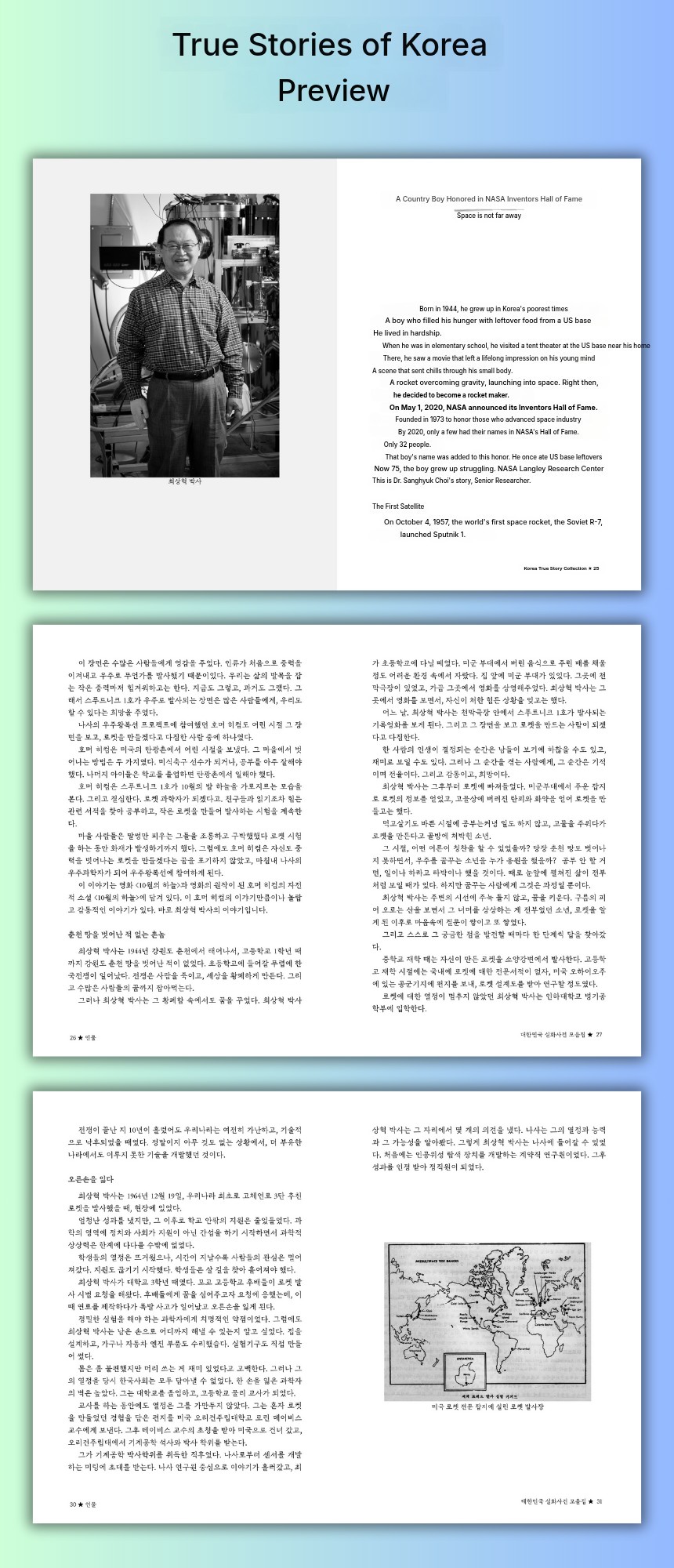
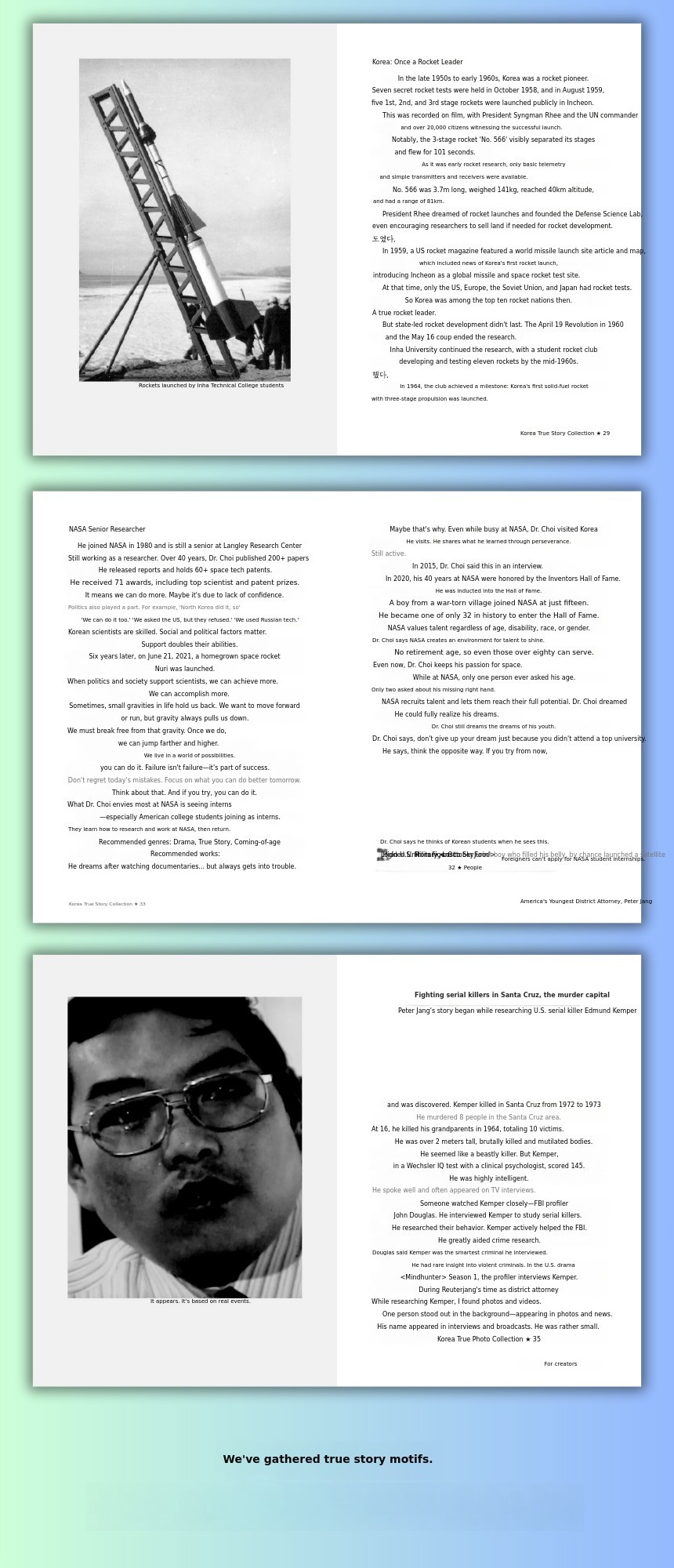 Volume 1: PDF, 205 pages
Volume 2: PDF, 193 pages
[Ultra Early Bird] Arc Plot Creator Set
<1945-2000 Korea Crime Archive> Paper Book (All 3 Volumes)
+<Collection of True Stories from Korea> (2-volume PDF eBook)
174,000 KRW
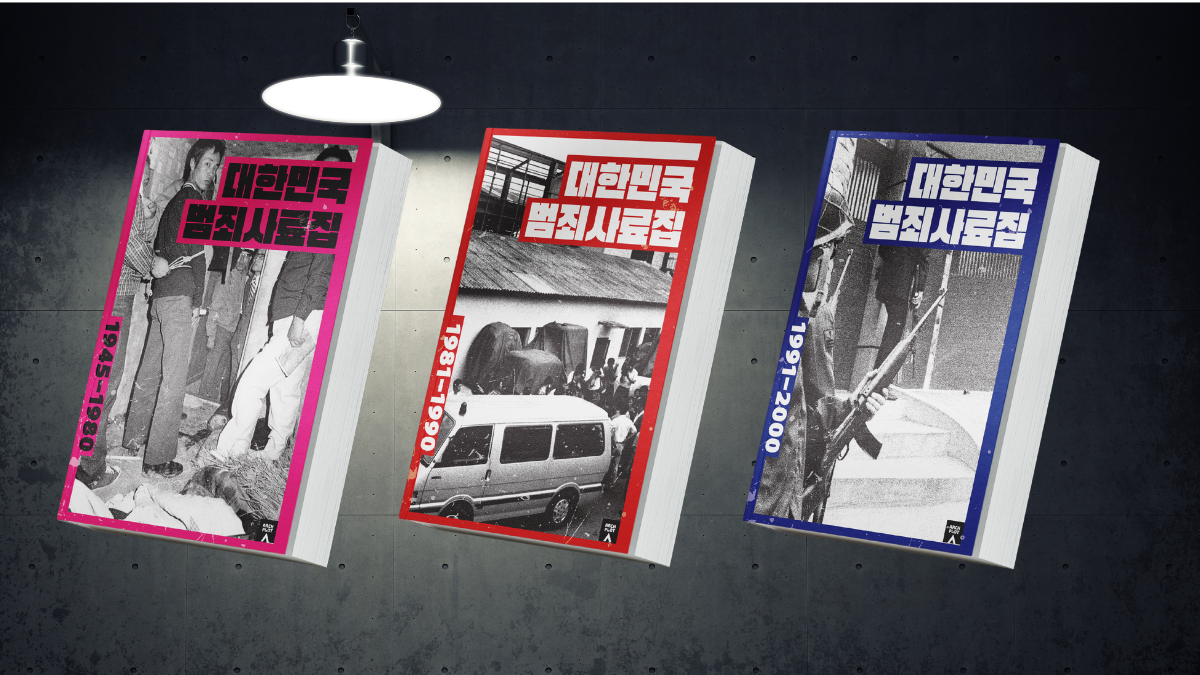

1. 1945- 2000 Korea Crime Archive (Total 3 Volumes) Paper Book
· 1945-1980 Crime Archive (Paper Book)
· 1981-1990 Crime Data Collection (Printed Book)
· 1991-2000 Crime Data Collection (Printed Book)
2. Collection of True Stories from Korea (Total 2 Volumes) PDF eBook
· Collection of True Stories from Korea Volume 1 (PDF)
· Collection of True Stories from Korea Volume 2 (PDF)
<Wadiz Exclusive Free Gift>
+Stories of 10 Serial Killers Around the World PDF
+Korean Cost of Living Data Book PDF
+World Serial Killer Timeline PDF
+World Serial Killer Timeline Video File and PPT File
+Joseon Incident Notebook PDF
*Printed book: Shipped by courier
*How to provide PDF, video file, and PPT file rewards: Google Drive
*Download period: 1 month from the reward delivery date
[Ultra Early Bird 2] ArcPlot Creator PDF Set
<1945-2000 Korea Crime Data Collection> PDF (All 3 Volumes)
+ <Collection of True Stories from Korea> (PDF eBook, 2 Volumes)
150,000 KRW

1. 1945- 2000 Korea Crime Data Collection (Total 3 Volumes) PDF eBook
· 1945-1980 Crime Data Collection (PDF)
· 1981-1990 Crime Data Collection (PDF)
· 1991-2000 Crime Data Collection (PDF)
2. Korea True Story Collection (Total 2 Volumes) PDF eBook
· Korea True Story Collection Volume 1 (PDF)
· Korea True Story Collection Volume 2 (PDF)
<Wadiz Exclusive Free Gift>
+Stories of 10 Serial Killers Around the World PDF
+Korea Cost of Living Data Book PDF
+World Serial Killer Timeline PDF
+World Serial Killer Timeline Video File and PPT File
+Joseon Case Notebook PDF
*Printed book: Shipped by courier
*How to provide PDF, video file, and PPT file rewards: Google Drive
*Download period: 1 month from the reward delivery date
[Super Early Bird 1] <1945-2000> Crime Reconstruction Printed Book Set
138,000 KRW
1945- 2000 Korea Crime Data Collection (Total 3 Volumes) Paperback
· 1945-1980 Crime Data Collection (Paperback)
· 1981-1990 Crime Data Collection (Paperback)
· 1991-2000 Crime Data Collection (Paperback)
<Wadiz Exclusive Free Gift>
+Stories of 10 Serial Killers Around the World PDF
+Korea Cost of Living Data Book PDF
+World Serial Killer Timeline PDF
+World Serial Killer Timeline Video File and PPT File
+Joseon Case Notebook PDF
*Paperback: Shipped by courier
*How to provide PDF, video file, and PPT file rewards: Google Drive
*Download period: 1 month from the reward delivery date
[Super Early Bird 2] <1945-2000> Crime Reconstruction PDF Set
114,000 KRW
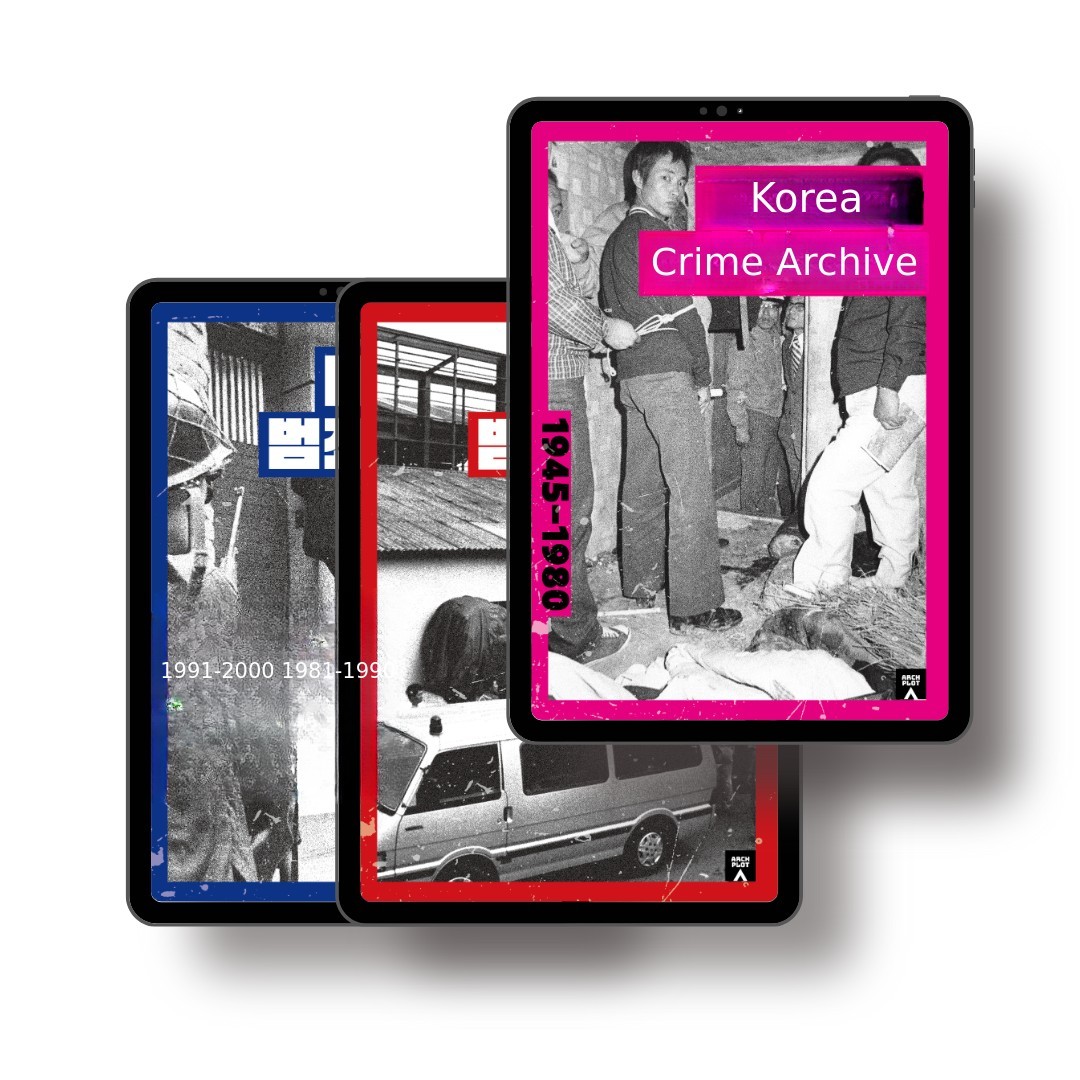 1945- 2000 Korea Crime Data Collection (Total 3 Volumes) PDF eBook
· 1945-1980 Crime Data Collection (PDF)
· 1981-1990 Crime Data Collection (PDF)
· 1991-2000 Crime Data Collection (PDF)
<Wadiz Exclusive Free Gift>
+Stories of 10 Serial Killers Around the World PDF
+Korea Cost of Living Data Book PDF
+World Serial Killer Timeline PDF
+World Serial Killer Timeline Video File and PPT File
+Joseon Case Notebook PDF
*Paper book: Shipped by courier
*How to provide PDF, video file, and PPT file rewards: Google Drive
*Download period: 1 month from the reward delivery date
[Super Early Bird 3] <1945-2000> Crime Reconstruction Paper Book + PDF Set
184,000 KRW
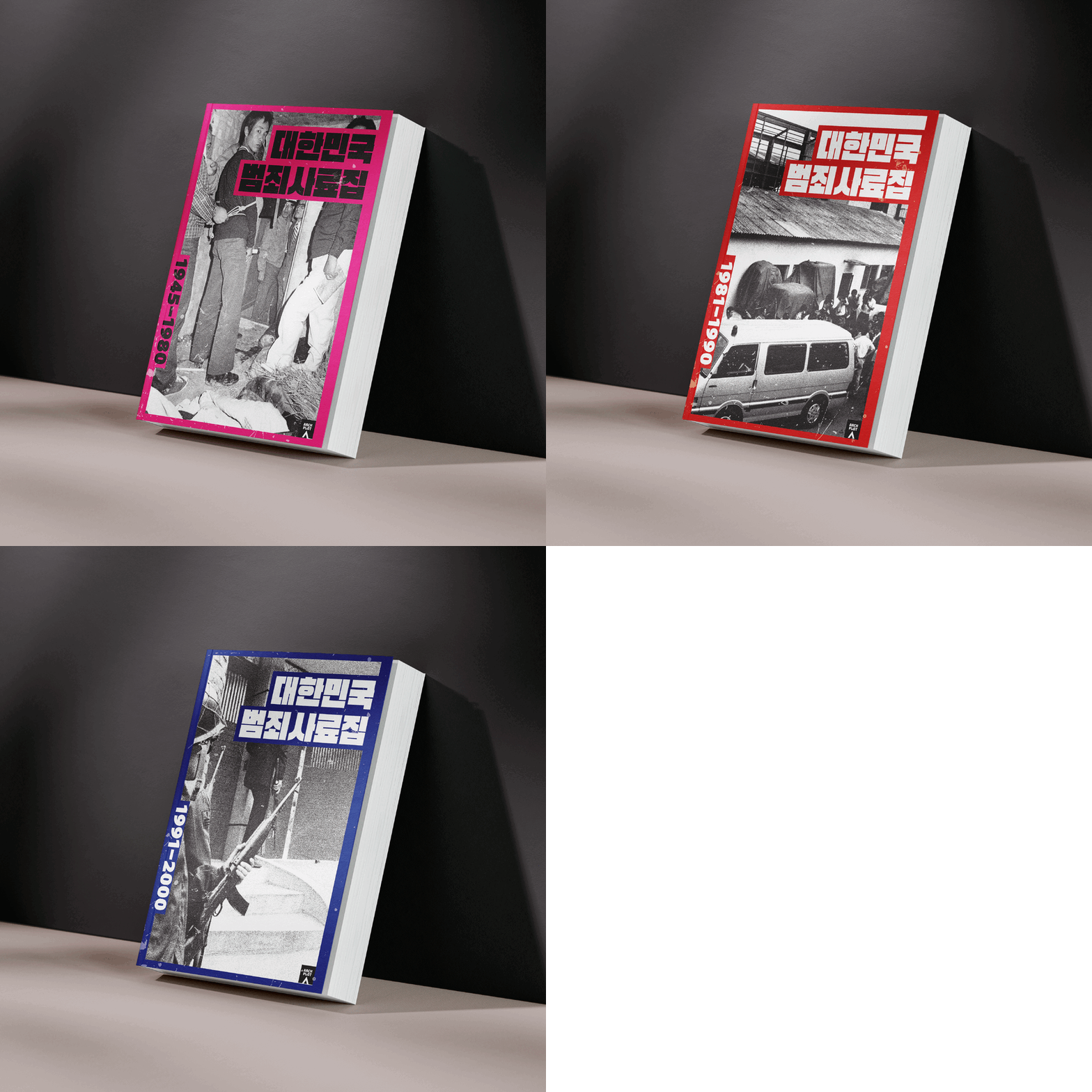
1945- 2000 Korea Crime Data Collection (Total 3 Volumes) Paper Book + PDF eBook
· 1945-1980 Crime Data Collection (Paper Book + PDF)
· 1981-1990 Crime Data Collection (Paper Book + PDF)
· 1991-2000 Crime Data Collection (Paper Book + PDF)
<Wadiz Exclusive Free Gift>
+Stories of 10 Serial Killers Around the World PDF
+Korea Cost of Living Data Book PDF
+World Serial Killer Timeline PDF
+World Serial Killer Timeline Video File and PPT File
+Joseon Case Notebook PDF
*Paper book: Shipped by courier
*How to provide PDF, video file, and PPT file rewards: Google Drive
*Download period: 1 month from the reward delivery date
[General] <1945-2000> Crime Reconstruction Paper Book Set148,000 KRW
[General] <1945-2000> Crime Reconstruction PDF Set124,000 KRW
[General] <1945-2000> Crime Reconstruction Paper Book + PDF Set194,000 KRW
(Same free gifts included)
Why did I start this project?
I have worked as a literary editor, especially a novel editor, for over 10 years. Knowing about these kinds of cases is helpful when talking with novelists. At such times, I would subtly hide the topics I wanted to write about and discuss past crime cases with novelists. Then one day, I thought.
"I could write something like that, too."
But I was stuck from the very beginning. I was blocked by not knowing what material or story to write, so I had to spend a long time searching for something to write about.
In fact, I created this book because I knew I would need it someday. Even when I found good material or inspiration and made notes, I often forgot about them because I couldn't organize them properly.
I asked a screenwriter I know.
"If there were a book like this, would you read it?"
"Of course. I need it."
So I decided to provide sources to more creators and more readers.
If you are a reader interested in crime stories, you can find cases in this book that you wouldn't see in existing works or crime programs. If you are a creator, you can find inspiration or material here.
Maker Introduction

Hello. I am B Ark, the CEO of the one-person company 'Arkplot.' As I mentioned earlier, I have worked as a literary editor for over 10 years. I got tired of that job, so I quit and traveled. Then, four years ago, I started working at a publishing company that publishes books in other fields such as business, economics, and humanities. But I didn't find it enjoyable. Both my body and mind became exhausted.
I decided to do what I love. That is, to create narratives—dramas, movies, novels, documentaries, biographies, and reportage. It was not an easy task. Who would entrust their manuscript to a one-person publishing company starting with no capital?
So I planned a project that I could do. The project I devoted myself to day and night is this <Korean Crime Archive>. While working on this project, I truly felt like I was losing my soul. Collecting countless shocking crimes wore me out both physically and mentally. Still, I wasn't as depressed as before. Because I was doing what I love, I was able to work even harder.
From now on, Arkplot will steadily provide you with narratives that you can read all night long.

The reason for running the project on Wadiz
While working at a publishing company, I became very disillusioned with the existing book market.
First, the market favors publishers with capital. Good authors, good staff, massive marketing. The more like that a company is, the more it focuses on sales. Creativity is needed for good planning, and that's how you make money, but in reality... you end up looking for bestselling authors first.
Second, no matter how much I wanted to pursue a project, I couldn't. Even if there were a small number of readers, it would be enough to publish a book, but I found myself calculating profits and losses first. My body and mind were exhausted, but after enduring for over 10 years, I finally reached a point where I couldn't move either, and that's when I started 'Arkplot.'
That's why I came to Wadiz to find people who would support this project.
<Korean Crime Archive>, <World Serial Killer Chronology>, <Major Case Timeline>, and so on. This project, into which I poured my heart, probably wouldn't even have been brought up in a meeting if I had planned it at a publishing company. I am confident that this is the best project I have ever created. I was happiest when I worked on and finished this project, even more than when I planned and edited bestsellers.I want to show this project to all supporters and receive your encouragement.
The funds you have contributed will be used for the operation of this project and for carrying out Arkplot's future projects.